My new favorite object

This porcelain miniature from the Frankenthal Porcelain Manufactory in Frankenthal, Rhineland-Palatinate is my new favorite object in the Met. It depicts, in a charming and cheerful fashion, a scene described by Herodotus (1.214) in which Tomyris, queen of the Massagetae, has Cyrus’ severed head dipped in blood, declaring “I warned you that I would quench your thirst for blood, and so I shall.”

Tomyris with the Head of Cyrus, Frankenthal Porcelain Manufactory, Germany, ca. 1773. MMA 1982.60.205. The Jack and Belle Linsky Collection, 1982.

I love the juxtaposition of gruesomeness and whimsicality. I really like the dog who is taking  a strong interest in the goings-on. I also appreciate the (18th century) period detail, such as the buckled shoes. The whole thing looks like something my grandmother would own.

In memoriam Christopher Plummer (1929-2021)

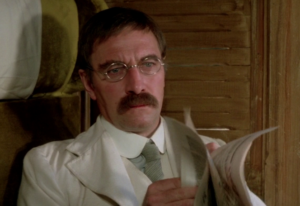
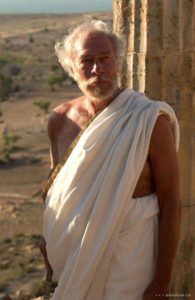
Normally I only commemorate academics on this site, but sadly enough, there have been some distinguished exceptions lately. Today I want to say a few words about one of my very favorite actors, Christopher Plummer, who died yesterday. Plummer was one of the most dignified actors I have ever seen. Thus, he equally at home playing Commodus (in The Fall of the Roman Empire, 1964) or Rudyard Kipling (in The Man Who Would Be King, 1975).

And who could forget General Chang, from Star Trek VI: The Undiscovered Country (1991)? Hamlet is better in the original Klingon, after all…

He was also, arguably, the best part of Alexander (2004), an otherwise hideously dreadful film, in which he played Aristotle.

ASOR’s Ask a Professor Webinar

ASOR, now renamed the American Society of Overseas Research (a meaningless name intended to preserve a stupid acronym), just announced an “Ask a Professor” webinar. According to the email I received from the essential and enduring Agade listserv:

The panelists will address topics such as choosing advisors, schools,
dissertation topics, building CVs, what skills to acquire as an MA,
PhD, post-doc etc. and the current status of the academic job market.

I can save you some trouble with several of this topics. First, don’t go to grad school in Near Eastern studies. The job market in that field has never been great, but right now it’s downright awful. I have counted twelve jobs announced on the Agade listserv since the summer, all but four in foreign countries. Of those four domestic positions, one is senior and the other three are Hebrew Bible jobs. Egyptologists, Assyriologists and archaeologists are out of luck entirely.

As for skills to acquire, I recommend programming and data analysis, as they seem to be in demand in the private sector. Certainly I wished I’d learned those things as a student. In a similar vein, one might as well learn bricklaying or how to coach volleyball, as these skills are also more likely to lead to employment than a PhD in Near Eastern studies.

I have an earlier post that addresses some of the remaining topics, which you can read if you really want to.

I don’t mean to bash a well-intended effort on the part of ASOR. But it’s akin to offering a fire safety course inside a burning building.

In memoriam Hank Aaron (1934-2021)

Today I received the sad news that Hank Aaron has died. His career includes a series of matchless accomplishments, not least of which are records for RBIs and All-Star Selections and his appearance on Season 3 of Futurama. He will be missed by baseball and comedy enthusiasts alike.

It’s official! (sort of)

I am pleased to report that it appears I will be teaching ancient Greek history at the University of California, Riverside this winter term. I say ‘appears’ because the faculty of the Comparative Literature department (where Classics lives at UCR) has voted to hire me, I am listed as the course instructor, and it’s too late to hire anyone else, but as far as I know the appointment hasn’t been finalized yet and the university administration is shutting down for the holidays! I shall proceed under the assumption that when the term begins in January everything will be in place. It will be an interesting experience to teach on both coasts simultaneously, which, strangely enough, has been made possible by the pandemic.

The most worthless book review ever

Normally I do not set much store by book reviews, but I could hardly ignore one I saw today in the Bryn Mawr Classical Review (2020.12.25). The review, by Catherine Michael Chin, is of The Tiny and the Fragmented: Miniature, Broken, or Otherwise Incomplete Objects in the Ancient World, edited by S. Rebecca Martin and Stephanie M. Langin-Hooper (Oxford University Press, 2018). I know the book, and also the editors and some of the contributors, and I was curious to see what the reviewer made of it, since it does grapple with some unusual topics in archaeological scholarship and has a broader geographical, chronological and intellectual remit than most things reviewed in the BMCR.

Now most book reviews fall into one of four categories, which I have listed below in ascending order of utility and descending order of entertainment value:

  1. Summaries: As boring and practical as they sound, especially when the review is in a different language than the book itself. These reviews tend only to provide major criticism when the book is fatally flawed for intellectual or technical reasons.
  2. Graduate student exercises: Many graduate students try their hands at reviews as a way of a) getting a free book and b) getting published. Like much student work, such reviews tend to be devoted to proving that the author has done the assigned reading, including both the book under review and anything else that is either tangentially related or laden with fashionable jargon.
  3. Flag-planting: Some scholars write reviews to indicate that they themselves are working on a project with a similar title, and thus use their reviews to explain how they would do a better job with the material or how their own projects (which may in fact never see the light of day) are actually completely different from the book in question.
  4. Vendettas: Some reviews are clearly by personal or academic animosity, either because of irreconcilable intellectual differences or good old fashioned grudges. Such reviews invariably make their authors and publication venues look bad, but great Caesar’s ghost are they exciting to read…

Chin’s review, which is characterized in the prefatory note as “a series of performance fragments,” falls off the typological chart altogether. It is hands down the most useless piece of drivel I have ever read in a scholarly venue, and I cannot fathom how it was published. I do not mean to suggest that Chin’s experience of the book is less valid than mine or anyone else’s. But the review completely fails to position the book in relation to its field — or anything other than Chin’s self-indulgence.

Kent Flannery once said “I’d rather be a second rate archaeologist than a third rate philosopher.” Well, unfortunately for all of us, Chin would rather be a third rate performance artist than a second rate book reviewer.

The Artaxerxes Phialai

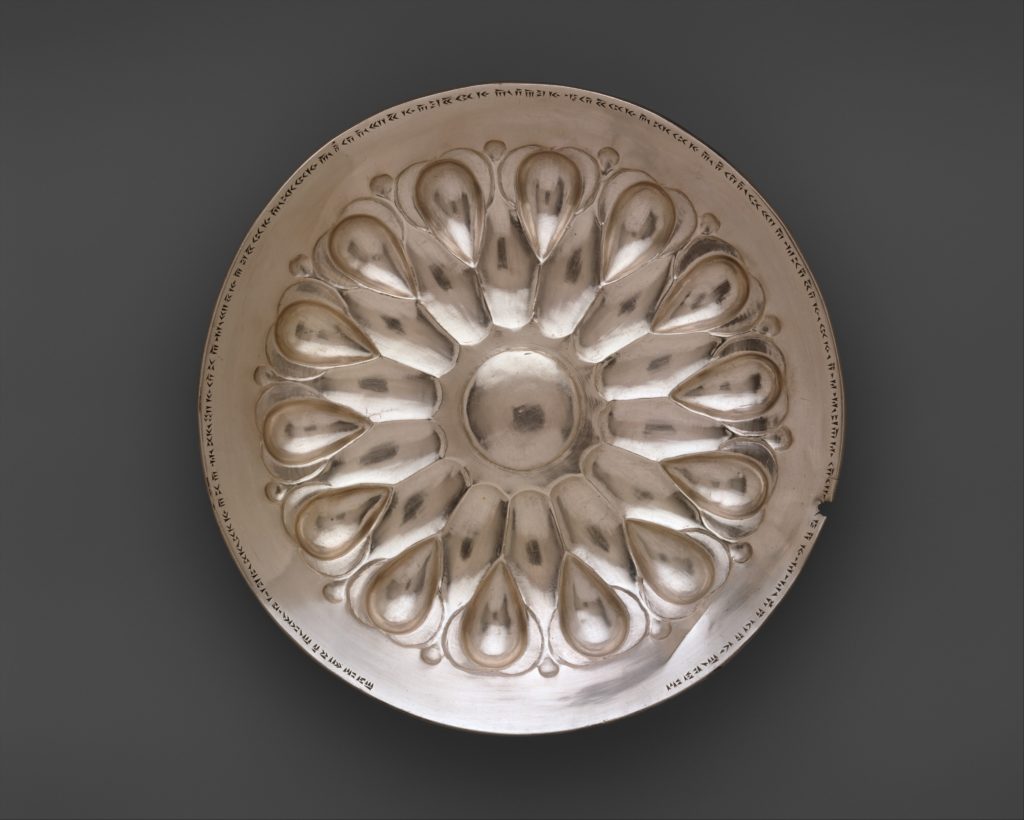
I am pleased to announce that my paper “Ernst Herzfeld, Joseph Upton and the Artaxerxes Phialai” has just been published in volume 55 of the Metropolitan Museum Journal. This short paper arose from my research in the archives of the Met’s Persian/Iranian expedition, in which I found a letter by Met curator Joseph Upton to his boss Maurice Dimand (head of the Department of Near Eastern Art, which at the time included both ancient and Islamic art) reporting that a dealer had offered to sell him the Artaxerxes phialai (of one which is in the Met).

 Lobed bowl with a royal inscription, ca. 465–424 B.C.
Achaemenid, Achaemenid
Silver; Height: 1 13/16″ ( 4.6 cm ) Diameter: 11 1/2″ ( 29.2 cm )
The Metropolitan Museum of Art, New York, Rogers Fund, 1947 (47.100.84)
http://www.metmuseum.org/Collections/search-the-collections/324026

This confirms Herzfeld’s own claim that he first saw the vessels with Upton, and makes it all the more unlikely that Herzfeld forged the inscription, as some have alleged in the past.

Incidentally, the Met’s phiale was not acquired by Upton; it was purchased by the museum in 1947 from the estate of Joseph Brummer, who had purchased it in 1940 from Arthur Upham Pope.

My new spring course

I am happy to announce that I have been hired to teach a course, entitled “Persia from Prehistory to the Sasanian Empire” at the Cooper Union for the Advancement of Science and Art this spring. (Actually, that’s the subtitle; the course is filling an ancient Near Eastern art slot.) Funnily enough, this is the first time I’ll actually be able to teach a course on my specific area of expertise! I’m really looking forward to it, and I’m grateful for the opportunity to keep one foot in academia for a little while longer. Of course, I’m very grateful that my wife has her job, because that’s the only way I can afford to take advantage of this opportunity.

On (not) applying to graduate school in the humanities

This past weekend a young man wrote to me to ask if I would be accepting graduate students next fall. I replied with the disappointing news that I am not, because I am not a professor or, well, much of anything these days, at least as far as academia is concerned. But I took the opportunity to give him some advice on (not) applying to graduate school, and I’ve posted my advice (with some light editing) below, for anyone else who might find it interesting, useful or scary.

Graduate school in the humanities is a wonderful experience to be sure, unlike any other. But it comes at an enormous cost. For the six to ten years you are in grad school earning a pitiful salary (most years I made $20,000), your contemporaries will be beginning careers and starting families. Moreover, the academic job market in the humanities, which has been steadily worsening since the early 90s, has now collapsed almost entirely because of the 2008 financial crisis and the current pandemic. This year only two ancient art and archaeology jobs have been advertised so far this year (and one of them is in Germany), as well as one ancient/medieval position. There will probably be at least fifty applicants for each. So your odds of finding a job as a professor, no matter how smart you are, are extremely thin. You may find some temporary jobs at first. Since I finished my degree in 2014 I’ve had five different jobs and lived in five different states. And you won’t have any choice about where you live. If you’re offered a job in Northfield, Minnesota, or Conway, South Carolina, you will take it, whether you want to live there or not. Many of us, though, will find ourselves competing with recent college graduates for entry level private sector positions where our PhDs and research accomplishments are completely meaningless. In fact, it’s harder to get a non-academic job with a PhD than without one, because potential employers assume (correctly) that you’d rather be doing something else.

If you do nevertheless wish to pursue graduate studies, keep in mind that institutional pedigree matters much more than it should. There are many wonderful universities out there, but only a handful supply faculty to all the others. Before you decide to attend a specific school, it is worthwhile to check on its recent record of placing PhDs in permanent jobs. And this can even vary within a given university: an art history department, for example, may have an excellent placement record, while the classics department at the same university may have a poor one.

No matter where you go, make sure you do not pay for your degree. That is, only accept an offer that includes a full scholarship. Grad school tuition is insanely expensive. I have a friend who paid for an MA at a private university and she now has over $100,000 in debt — for a 2-year degree! Full scholarships also typically include the opportunity to get vital teaching experience.

Finally, language study is essential. In addition to Greek and Latin, classicists and classical archaeologists must also be able to read French, German and Italian. Some of these languages you can learn as a graduate student, but it is best to start as early as possible. To that end you might also consider getting a terminal MA degree in order to make yourself a stronger candidate for a PhD program. That’s what I did. Once again, only accept an offer that includes a full scholarship. And unlike PhD programs it doesn’t matter so much where you earn your MA. It will also give you an opportunity to try out graduate school for a few years to help determine if it is actually to your liking!

I am sure this is not the response you wanted. But I am equally sure that it is what you need to hear. As I said, graduate school is wonderful, but it also comes with significant downsides that can follow you for the rest of your life. You’re not just deciding what to do next; you’re shaping your entire future. So you cannot make this decision lightly, and you certainly cannot rely on what your professors are telling you, because they don’t understand this world at all. They believe that academia is a strict meritocracy, in which the best candidates naturally rise to the top and find lasting employment. In their view, personal ability is the primary determinant of success. But in reality academia is a high-stakes game of chance, and as with any gamble you should only play if you’re sure you can afford to lose.