Hyperallergic article on ‘vintage’ orientalism

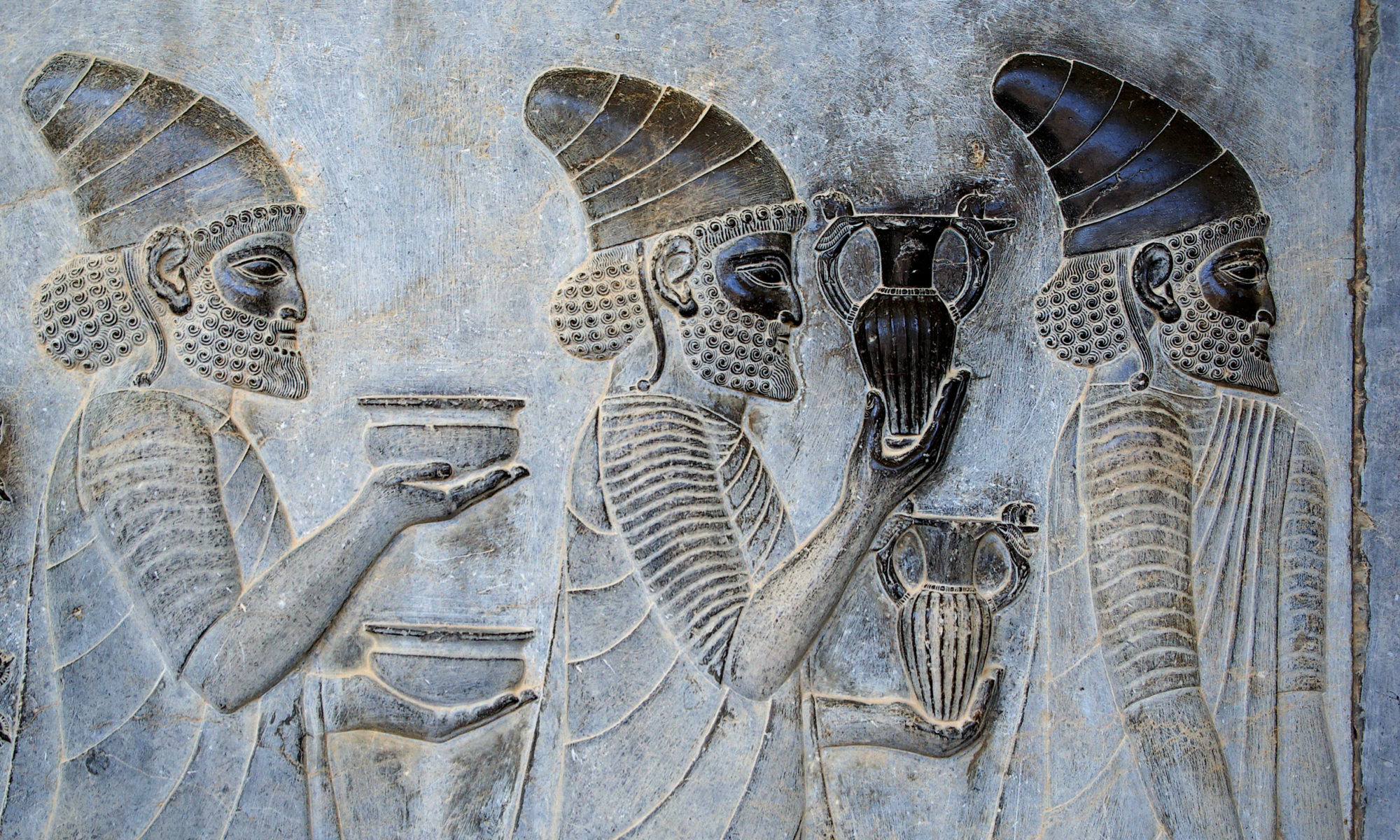
This article by Katherine Blouin, Monica Hanna and Sarah E. Bond makes a compelling case that the ‘Vintage Egyptologist’ persona cultivated by Colleen Manassa Darnell (of Yale Egyptology infamy) on her various social media platforms glorifies the colonial domination of Egypt. While some people, such as Melania Trump, simply don’t know any better, Manassa Darnell and her husband are bona fide Egyptologists who know full well what kind of message their sartorial choices communicate. I applaud Blouin, Hanna and Bond for calling them out.

The clearing at the end of the path

As Roland Deschain might say, we’ve reached the clearing at the end of the path. Or rather (before anyone panics about my health), my career has. Yesterday was the final day of my fellowship at the Met; today is my first day of unemployment. Fortunately, thanks to my advisor’s generosity, I am still affiliated with my alma mater, the University of Michigan, which provides a satisfying intellectual veneer and, more importantly, library access (albeit remotely). But I am also now actively looking for work in such venues as the North Jersey Craigslist, which is depressing to say the least. I am looking for academic work too, of course, though anything for which I might apply now will likely not start until next summer or fall. But I am not optimistic about my chances. I have applied for over 200 academic jobs since the fall of 2013 when I began my search, and I have still not found lasting work. Now there’s a pandemic on, and my search is limited to the greater New York area, which means two things: 1) to get a job I will have be very lucky indeed, much luckier than I have ever been before, and 2) I need to find some way to making a living in the interim. Of course, I may very well get lucky! It is more difficult than ever these days to predict what will happen.

My updated job guide

I have just posted the latest version of my guide to classical archaeology job market here and at academia.edu, where it has already received a fair bit of attention. The main additions are some comments about COVID-19, an appendix with tables summarizing the typologies of jobs and institutions, another index listing archaeologically relevant fellowships (some of which are better than others), and a postscript discussing my departures from academia in 2016 and again (most likely) in 2020.

This will likely be my final update to the guide, since my own future in academia seems quite uncertain. On the one hand, I still have applications pending for academic work various kinds, one of which may yet pan out, in which case my gloomy outlook will have been unwarranted. On the other, it is very difficult to be optimistic at a time like this. It is true that I have already been forced out of academia once and nevertheless managed to return. But that was in a very different economy than the present one, and I am preparing myself for the very real possibility that this time there will be coming back.

This pendant looks like Marty Feldman

Today, in the course of my museum duties, I discovered a Sumerian shell amulet, which looks remarkably like Marty Feldman (MMA 55.65.11):

“What the hell are you doing in the bathroom day and night? Why don’t you get out of there and give someone else a chance?”

Discoveries like this are why I got into archaeology in the first place.


In memoriam David Stronach (1931-2020)

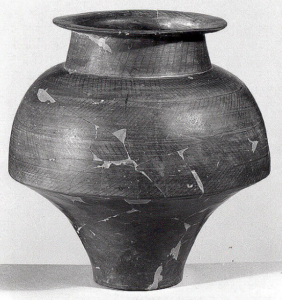
Today the sad news reached me that David Stronach has died. As director of the British Institute of Persian Studies in the 1960s and 70s he was a prolific excavator, a fact I have come to know well because material from several of his site — including Pasargadae, Tepe Nush-i Jan, Tall-i Nokhodi, Shahr-i Qumis and Yarim Tepe — is in the Met. This elegant carinated jar (63.102.10) is one of the vessels he found at Yarim Tepe:

Carinated vase from Yarim Tepe, ca. 3000-2250 BCE. Ceramic; H. 17.81 cm. Metropolitan Museum of Art 63.102.10.

Not only was he a consummate excavator, but he published preliminary reports religiously, a fact for which I (and many other scholars) am extremely grateful. Moreover, his final report on Pasargadae (Oxford, 1978) is an exemplary archaeological publication. After the Iranian Revolution in 1979 he became a professor at Berkeley, where he supervised many of today’s leading archaeologists of ancient Iran. And he continued to publish. In fact, I think he published some of his best papers after 2010.

I only me Prof. Stronach once, in a burger restaurant in Santa Monica. He was a gentleman to me, and showed genuine interest in my work. I was glad to have had that opportunity to talk with him, and am very sorry at his loss.

Udjahorresnet

My latest essay on Udjahorresnet, entitled “Udjahorresnet the Persian: Being an Essay on the Archaeology of Identity,” has just been published in an open access special issue of the Journal of Ancient Egyptian Interconnections. The entire issue is dedicated to Udjahorresnet, who frankly deserves the attention. I was reluctant at first to participate, because I am trying very deliberately to take my research in a somewhat different direction, not because I have anything against Egypt per se, but because I feel as if I’ve said most everything I have to say on the topic. But I decided that this special issue was a good opportunity to think hard about Achaemenid identity and its material correlates, which is in fact a topic to which Udjahorresnet’s naophorous statue speaks very clearly. In the end I am very happy with this paper, even though it is an Egyptian paper that is not about Egypt, but turns out to be about Egypt after all. I guess that’s what JAEI is for!

My dog is on Instragram!

In more serious news, my wife and several of her colleagues in the Department of Greek and Roman art at the Met made an Instagram post featuring their pets compared to objects from the museum. Our dog Albert is first pet to appear, since, obviously, he’s the best looking.

The Harvard Semitic Museum’s new name

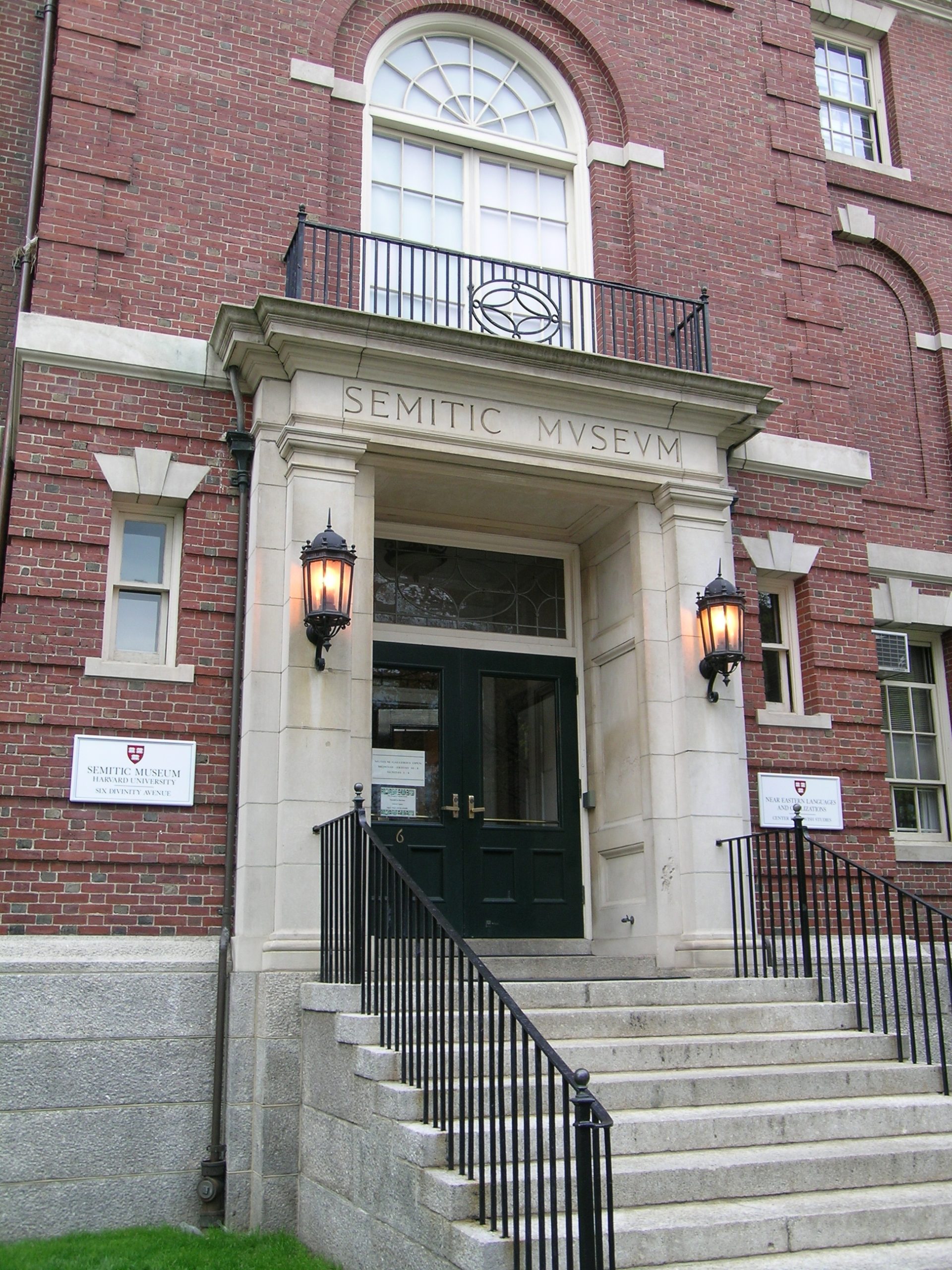
Last week the Harvard Gazette reported that the Harvard Semitic Museum has changed its name to the Harvard Museum of the Ancient Near East, on the grounds that it more accurately reflects the range of the museum’s collections and exhibitions. The term ‘Semitic’ refers to the Semitic language used in the ancient Near East — Akkadian, Aramaic, Phoenician, Ugaritic and Hebrew. But obviously there are many more languages than these (Sumerian, Egyptian, Hittite and Elamite, for example), and, more importantly, many people do not actually know this linguistic definition of ‘Semitic,’ instead associating it solely with Jewishness. Of course, ‘Ancient Near East’ is a problematic term too, but the new name is certainly an improvement.

Speaking of new names, I wonder what the American Schools of Oriental Research will do about its name. It’s re-branded itself as ‘ASOR,’ but this doesn’t mean anything other than ‘American Schools of Oriental Research.’ (The same problem exists with the University of London’s School of Oriental and African Studies calling itself ‘SOAS.’) What it needs is a new name altogether, like ‘American Society of Near Eastern Research’ (though again, ‘Near East’ isn’t the best term). ‘ASNER’ is as good an acronym as ‘ASOR.’ Better yet, it could become the ‘Society for the Ancient Middle East,’ i.e. ‘SAME!’

I haven’t been paying attention, but I wonder if the American Oriental Society is planning a name change…