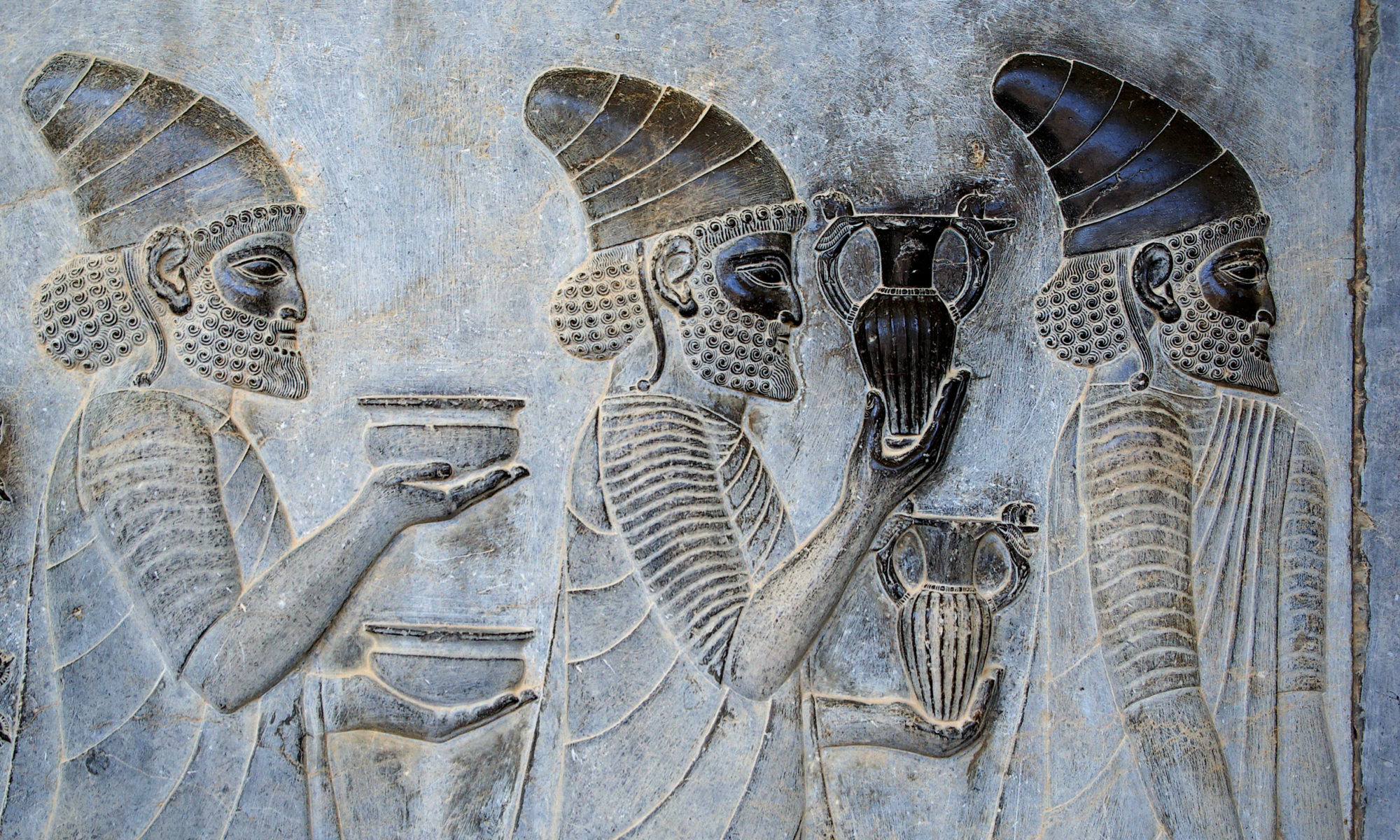
With museums closed the traditional method for engaging with a work of art – close examination in person – is now impossible. The J. Paul Getty Museum has come up with an interesting way to address this loss, by challenging people to recreate works of art in its collection at home. The results, as posted on the Getty’s Iris blog, are spectacular. My personal favorite is the Cycladic harpist.
Qui puer bonus est?
Review of the reinstalled Getty Villa
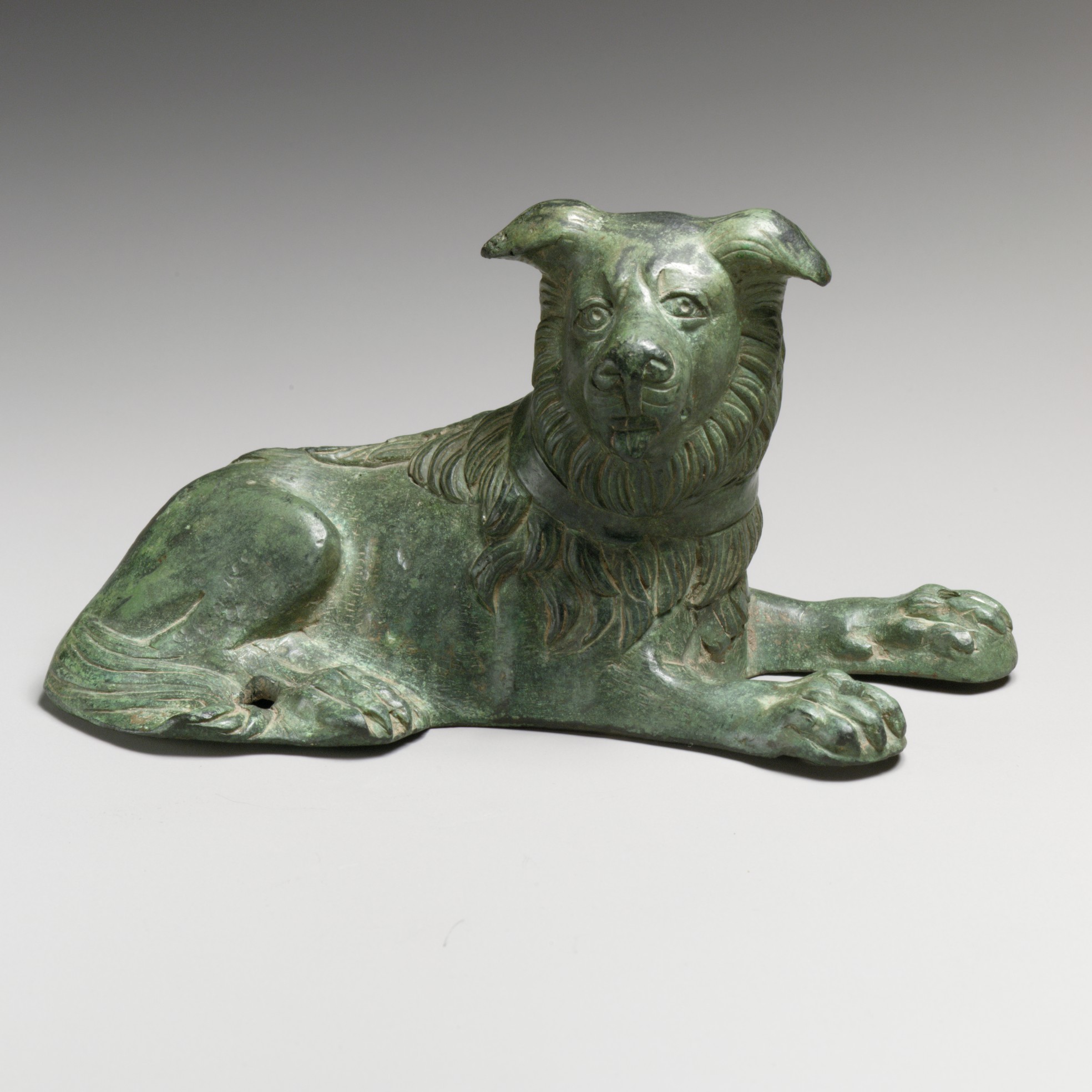
I highly recommend Elizabeth Marlowe’s review of the reinstalled Getty Villa, which was just published in the American Journal of Archaeology. You may recall that before 2016 the galleries at the Villa were arranged thematically. Now, at the initiative of Tim Potts and Jeffrey Spiers, they are organized chronologically. Marlowe’s review, I think, considers the ramifications of this quite nicely, and generally articulates the strengths and weaknesses of the new galleries. She is especially critical of the lack of attention to provenance information on labels. Given the Getty’s track record, it is easy to see why this seems suspicious — what do they have to hide? But I can also say from experience that there is constant pressure to reduce verbiage on labels, and while provenance is certainly important, it is often the first victim of space considerations. At any rate, the review is a stimulating read, and I commend it to you all.
Lecture cancellation
COVID-19 has claimed another victim: my talk scheduled for this Friday entitled ‘How to Get a Persian Rock Relief into a Museum.’ No word yet on whether or not it has been rescheduled, but given that a) coronavirus will most likely stay with us into the summer, and b) at least two of the fellows in the session will have left by then, it does not seem likely. I’m not disappointed; these fellows talks, including my own, can be pretty hit or miss.
In memoriam Robert H. Dyson, Jr.
This past week I attended the 14th Melammu Symposium at UCLA, which began with the sad news that Robert H. Dyson, Jr. has died at the age of 92. Perhaps best known as the excavator of Hasanlu in northwestern Iran from 1956 to 1977, Dyson was also a museum curator and administrator. While the manner and publication of the Hasanlu excavations have raised questions in recent years, it is doubtless thanks to Dyson’s tireless efforts that so much material from that site is known and available for study, and the University of Pennsylvania is one of the major centers for the study of Iranian art and archaeology. Indeed, his support for Iranian colleagues, such as Ezat Negahban, in the face of major political challenges marks him as one of the most important contributors to this field; his passing is accordingly a major loss.
New publications
 I am happy to report the (fairly) recent publication of two essays of mine. First, last month my essay “The Canon of Ancient Iranian Art: From Grand Narratives to Local Perspectives” was published in Testing the Canon of Ancient Near Eastern Art and Archaeology, edited by Amy Gansell and Ann Shafer (Oxford University Press). Hard copies of the book are only just now available. In this essay I argue that the ‘canon’ of ancient Iranian art arose from a combination of excavated sites and unprovenanced objects, which were organized into a historical sequence. This results in a canon that favors similarity over local variation, and obscures the richness of Iran’s archaeological record.
 The second paper, co-authored with Dr. A. M. Belis, is a publication of an Urartian belt in the J. Paul Getty Museum, with a discussion of the origin of the ‘Parthian shot,’ as both an artistic motif and a military tactic. We suggest that it was first used by the Urartians, and the Assyrians were consequently the first to depict it, in a relief at the Northwest Palace at Nimrud. It is published in volume 12 of the Getty Research Journal.
Here’s Johnny!
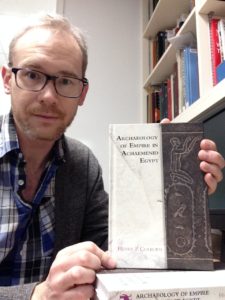 The hard copies of my book arrived from Scotland yesterday afternoon! I also discovered that it’s available on Jstor. This means I am finally done working on it in every way, and there’s nothing left to do but wait for the reviews. And get started on my next book…
Blog post about my book
A short discussion of my book has appeared on the EUP blog. The book itself is now for sale, and although I have not yet seen it myself I am told that hard copies exist in Scotland! I say this definitely counts as published, and I highly recommend that anyone interested in buying it us this discount flyer.
Upcoming lectures
Last week I wrote two abstracts for talks I’ll be giving in the spring, so it seems an opportune moment to note here my upcoming public lectures.
1.) On December 12 I will give a talk for Seminar for Iranian Studies at Columbia University entitled “Drinking Like a Persian: The Archaeology of Achaemenid Drinking, from Egypt to Gandhara.” Here’s an abstract of my talk:
Herodotus famously remarked that the Persians reconsidered while sober every decisions they made while drunk, and vice versa. While this comment was intended to illustrate the differences between Greeks and Persians, it also suggests the social and cultural importance of drinking in the Achaemenid Empire. Notably, the Great King used the royal table as a venue for displaying his unique position in Persian society and as an opportunity for creating dependent relationships with subordinates. He accomplished by this by giving gifts of drinking vessels, especially rhyta and phialai, resulting in these types of vessels becoming markers of prestige. This in turn led to the creation of local imitations of such vessels across the empire. Another distinctive drinking vessel, the ‘Achaemenid bowl,’ was used as a marker of imperial unity in the reliefs of the Apadana at Persepolis. The discovery of rhyta, phialai and Achaemenid bowls in such far flung regions as Egypt and Gandhara indicate the extent to which people in these areas participated in a social hierarchy centered on the royal court and in some respects even aspired to be ‘Persian.’
2.) At the 14th Melammu Symposium, ‘Contextualizing Iranian Religions in the Ancient World,’ taking place at the University of California, Los Angeles February 18-20 I will deliver a talk entitled “Persian Kings and Egyptian Gods: Religious Innovation in Achaemenid Egypt.” Once more I provide an abstract below:
The study of the relationship between Persian kings and Egyptian gods has focused mainly on questions of sacrilege and neglect. Yet there is evidence for religious innovation as well. In the Kharga Oasis in Egypt’s Western Desert Darius I created a new kind of Egyptian temple, one that prefigures the ‘encyclopedic’ temples of the subsequent Ptolemaic period, such as at Edfu. This temple contains images of some 700 gods from throughout Middle and Upper Egypt. The purpose of this divine collection was to populate the oasis with the gods worshipped by the people who had moved there from the Nile Valley as part of a Persian effort to integrate the Western Desert into existing networks of imperial control. At the same time the process of creating this new temple goes beyond the mere performance of pharaonic duties and suggests an interest in creating systematic knowledge of the ‘gods of others’ (to borrow a phrase from Amélie Kuhrt). While this interest arguably served imperial goals, it also raises the possibility that the Persians did not regard Egyptian religion as entirely inconsistent with their own cosmic worldview.
3.) At an as yet unscheduled Fellows’ Colloquium at the Met I will present a talk called “How to Get a Persian Rock Relief into a Museum.” Before anyone gets too worried by the title, here’s my (provisional) abstract:
In 2019 the Department of Ancient Near Eastern Art at the Met acquired an illustrated Persian manuscript dating to the Qajar period. The manuscript records a journey taken by Louise de La Marnièrre, a tutor to the Qajar princes, through southwestern Iran in the late 1830s. La Marnièrre was accompanied by an Iranian scribe, ‘Ali Akbar, and artist, Ahmed Naqqash, who produced this unique manuscript that illustrates in a vibrant manner many of the Achaemenid and Sasanian monuments she visited.
This talk explains why an ancient art department acquired a manuscript dating some 1200 years after what is generally considered the ‘end’ of antiquity. There are three main reasons. First, it lets us display monuments in Iran in our galleries. For example, rock reliefs are a major feature of Sasanian art, but by their nature they cannot be displayed in museums. Second, it allows us to include Iranian voices in our galleries. The study of the ancient Near Eastern is dominated by Europeans and Americans, yet Iranians have engaged with ancient art and architecture for centuries. Third, it illustrates the continuing importance of antiquity in later periods of Iranian history, such as in the Qajar dynasty, and can create explicit links with the museum’s Islamic galleries. By displaying this manuscript we can present multiple views of ancient Iran and thereby increase the ways by which we might connect with our visitors.
The old-white-malest of crimes
I highly recommend Erin Thompson’s (possibly the only professor of art crime in the US) recent piece in Eidolon entitled The Old-White-Malest of Crimes: Insider Theft from Libraries and Archives. While focused mainly on the recent revelation of thefts of papyri from the Egypt Exploration Society, it digs deeper into how people like Dirk Obbink can get away with such thefts, mainly in that their privileged positions (as old white men) give them more access to potentially valuable material. What’s especially scary is how easily they can cover their tracks; the EES, for example, really has no way of knowing how many papyri were purloined because there isn’t a comprehensive catalog. Also there’s a castle in Texas…