But wait, there’s more

My own reasons for disliking the AIA pale in comparison to what actually happened this year.

As I have said before, and no doubt shall say again, Classics is a fundamentally racist field, and whatever value it has was acquired and maintained at the expense of others. And I don’t expect that to change anytime soon.

Why I’m not going to the AIA meeting

The annual meeting of the Archaeological Institute of America starts today in San Diego, and I am pleased to say that I won’t be there. Unlike last year, when my absence was the result of inclement weather in Boston, this year I am not attending by choice — a luxury afforded by my two-year fellowship at the Met. I would have stopped attending long ago if I had any choice in the matter, which I feel I do not, so long as I am actively looking for employment as an archaeologist in some capacity. Thus this seems like an opportune moment to articulate why I don’t care for the AIA meeting, if only for cathartic reasons.

  1. It’s expensive. My first job included travel funds, which was nice, but my next three did not, meaning that whatever I spent came out of my meager salary. This year Jacquelyn Clements has created an informal survey to try to get a sense of how much one typically spends going to the meeting, and I am looking forward to seeing the results.
  2. The talks are terrible. Certainly there are exceptions to this; in Seattle in 2013 I saw a brilliant talk on how timekeeping is a social construct and what its implications are for archaeology in Armenia. However, it followed a talk arguing that no one in the Near East knew how to swim. The bar is much too low.
  3. There are too many talks. Even if I am fortunate enough to find a handful of talks that interest me, they are invariably scheduled at the same time in widely disparate places. The meeting would be greatly improved if there were far fewer parallel sessions, and therefore far fewer talks, meaning that the standard for acceptance would have to be raised (in theory, anyway).
  4. The talks are too heavily slanted towards reports on fieldwork. That is not to say such reports are unimportant, but as often as not these reports are a tedious list of trenches dugs and objects recovered, without any attempt to engage with the broader research question. As a result, the talks are only meaningful to people already intimately familiar with the site or region in question – very inside baseball (and very dull). Perhaps the broader problem is that most of the archaeologists giving these talks do not have research questions any more complex than “what will I find if I dig here?” or “will I find the same things as I did last year if I keep digging in the same place?”
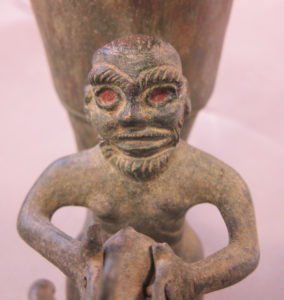
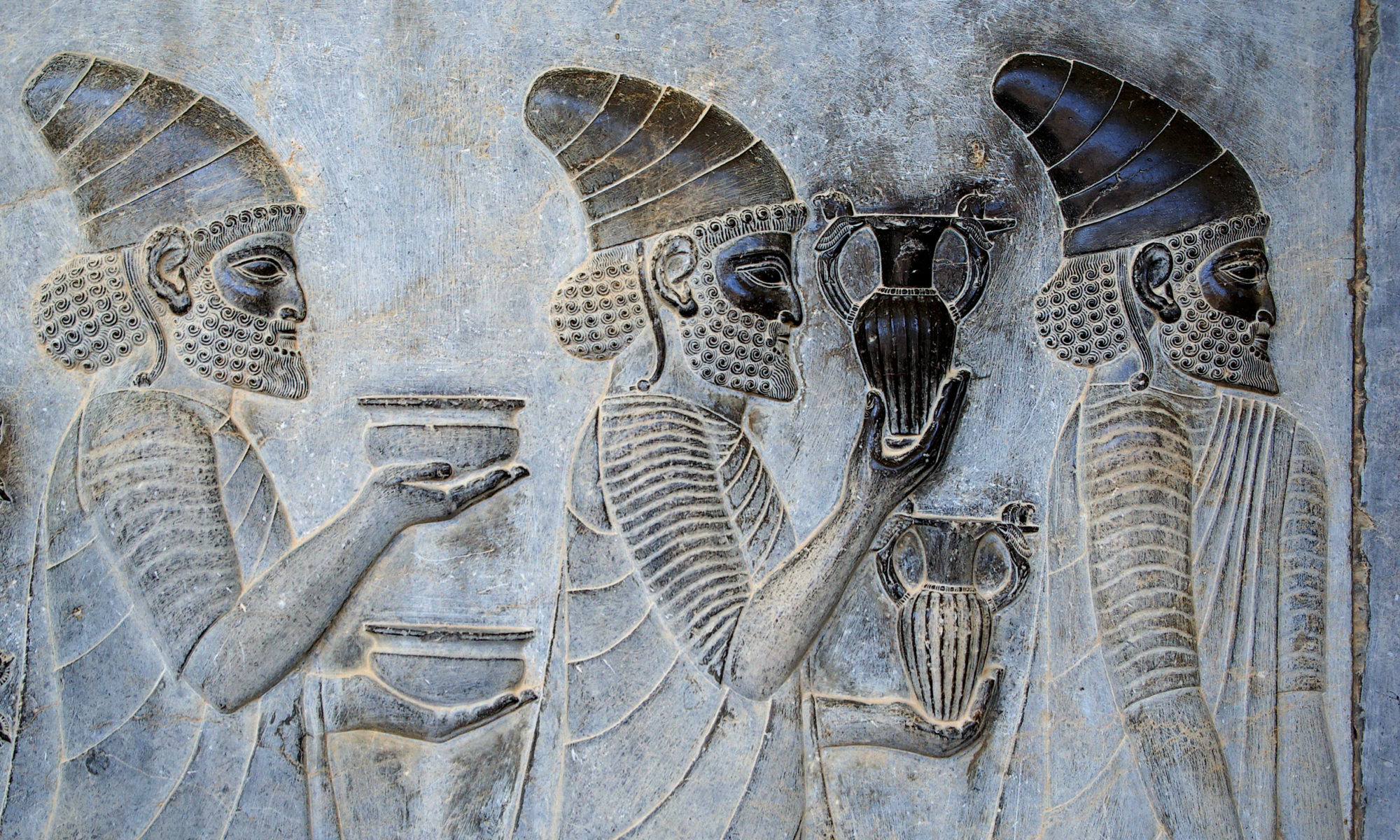
  5. Roman archaeology dominates the meeting. Perhaps this is simply a reflection of the preponderance of Roman archaeologists in the field of classical archaeology, but this causes the meeting to be even less inclusive and interesting. The presence of a token panel called ‘The Near East’ is one of the clearest examples of the chauvinism of the classics. Just because the Greeks hated the Persians doesn’t mean that we should too.
  6. There are no meaningful networking opportunities. Faculty in graduate programs like to toss out the old canard that the meeting is good for ‘networking’ (this is what passes for ‘advice’). Anyone who has been to the meeting knows this is not true. The key to networking is to have senior faculty at one’s own institution introduce students and early career scholars to their senior colleagues. But those senior faculty, if they attend the meeting at all, spend the entire weekend drinking with their senior colleagues, to the exclusion of lesser beings such as students and recent graduates. Moreover, this generally takes place in the prohibitively expensive hotel bar.
  7. Candidates interviewing for jobs generally cannot relax until the last of their interviews has taken place. Candidates with no interviews generally cannot relax at all. This makes it hard to care about how many sherds of terra sigillata were recovered from Trench C33.16NE.
  8. It is true that I will miss seeing old friends, but by now, after five years on the market, most of my friends either have jobs or have stopped looking, and therefore have no need or desire to attend the meeting.

Here concludes the rant. If you’re interviewing for a job in San Diego, good luck!

My book manuscript is submitted!

Happy New Year! I am very pleased to report that I have just submitted the full manuscript of my book Archaeology of Empire in Achaemenid Empire to the Edinburgh University Press. If all goes well it will appear in the series Edinburgh Studies in Ancient Persia, but of course further rounds of revision may be necessary before that happens! I shall provide further updates here as events warrant.

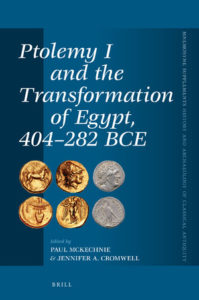
Review of Ptolemy I and the Transformation of Egypt, 404-282 BCE

Tara Sewell-Lasater of the University of Houston has just reviewed Ptolemy I and the Transformation of Egypt, 404-282 BCE in the Bryn Mawr Classical Review. I am pleased to report that she saw my chapter, “The Role of Coinage in the Political Economy of Fourth Century Egypt,” in a very favorable light, and I am especially gratified that she appreciated my efforts to integrate coins into the study of the ancient Egyptian economy.

This chapter grew out of my 2011 paper for the American Numismatic Society’s Eric P. Newman Summer Seminar. Part of it, focusing on the fifth century BCE, will appear in a my forthcoming book Archaeology of Empire in Achaemenid Egypt. But in trying to understand the role of (Greek) coins in Persian period Egypt I found myself trying to understand the structure of the Egyptian economy, and the paper accordingly ballooned into this chapter! The fourth century, which really falls outside of the parameters of my book, was the perfect place to try to test these ideas.

As I have often said in person, I am not an Egyptologist and I have no ambition to become one. Nor am I especially skilled as a numismatist, though I continue to develop my abilities in that area. So this chapter will probably be my only foray into Egyptian history and archaeology outside of the context of Achaemenid rule. I am happy that it has been well received so far!

Incidentally, I have also published a very brief discussion of this same topic on pages 113-15 of Beyond the Nile: Egypt and the Classical World, the catalog accompanying the eponymous exhibition at the J. Paul Getty Museum (which closed September 9).
The Animal-Shaped Vessels book is here

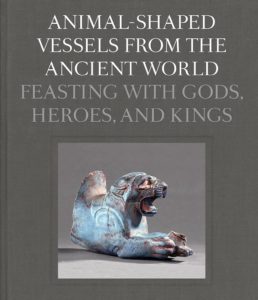
At long last I have in my hands Animal-Shaped Vessels from the Ancient World: Feasting with Gods, Heroes, and Kings, edited by Susanne Ebbinghaus (Harvard Art Museums, 2018). It features my essay “From the Mediterranean to China — After Alexander,” which discusses Parthian, Sasanian, Sogdian, Gandharan, Tibetan and even Chinese rhyta and other vessels. It also includes Susanne’s essay “Emblematic Animals at Iron Age Feasts,” to which I contributed a discussion of pitchers, with examples from Kush, Iran, Cyprus, and Etruria.

Susanne has been studying rhyta and other zoomorphic vessels since the 1990s, and this book, along with the exhibition of course, represents the culmination of decades of work. While I’m certain she has more to say on the subject, this book is the authoritative statement on vessels of this sort, and I am honored to have contributed to it.

Upcoming lecture on Achaemenid silver

On November 3 I will give a lecture at the symposium Between Art and Asset: Silver Vessels from Antiquity to Today at the Harvard Art Museums. My lecture is entitled “Achaemenid Persian Silver: Notes on the Fungibility of Meaning.” I’ve posted the abstract below:

The functions of silver in antiquity are easily discernible from the surviving objects made of it. But, as in the present day, ancient silver had multiple meanings; it could be a status symbol, a mark of royal favor, or currency. My goal is to examine the evidence for the various meanings of silver in the Achaemenid Persian Empire (c. 550-330 BCE), and to consider how these meanings, like the metal itself, could be readily transformed.

I’ll be discussing a number of objects in the Harvard and Met collections, as well as the concepts of value and social and economic capital.

Animal-Shaped Vessels opens tonight!

Bronze rhyton with centaur holding goat, perhaps Saka, c. late 1st millennium BCE. From Gilgit (Pakistan). Oxford, Ashmolean Museum, EA 1963.28. One of my favorite objects in the show!

The exhibition Animal-Shaped Vessels from the Ancient World: Feasting with Gods, Heroes, and Kings opens tonight at the Harvard Art Museums, with a keynote lecture by Michael Dietler of the University of Chicago.

To my mind the real intellectual value of this exhibition is the way it explores the transmission of forms and ideas across time and space. The form of the rhyton, or drinking horn, is easily adopted by one group from another, but the ideas underlying that form — its meaning, or ritual significance, for example — are not necessarily adopted along with it. And the rhyton form itself also changes, depending on how different groups understand it, or based on aesthetic sensibilities or technological preferences. This exhibition brings together an essential body of evidence for examining this fascinating topic.

I worked on this exhibition as a curatorial fellow at Harvard in 2014-15. Mostly I did object research on Hellenistic, Parthian, Sasanian, Gandharan and Sogdian vessels, on which I wrote the relevant chapter of the companion book, but I also helped with some preliminary design aspects, and even identified some potential loans. When I left Harvard in 2015 many aspects of the show were still in flux, so I am very much looking forward to seeing the final product.

Welcome to my site

This is my new website, hosted through Humanities Commons. It provides information about my current and past research, my museum work, links to my published papers, and anything else I may wish to share. I should note as well that this site is no way affiliated with any of my current or past employers; I am solely responsible for everything you see here. It should be fully up and running in the next few weeks.