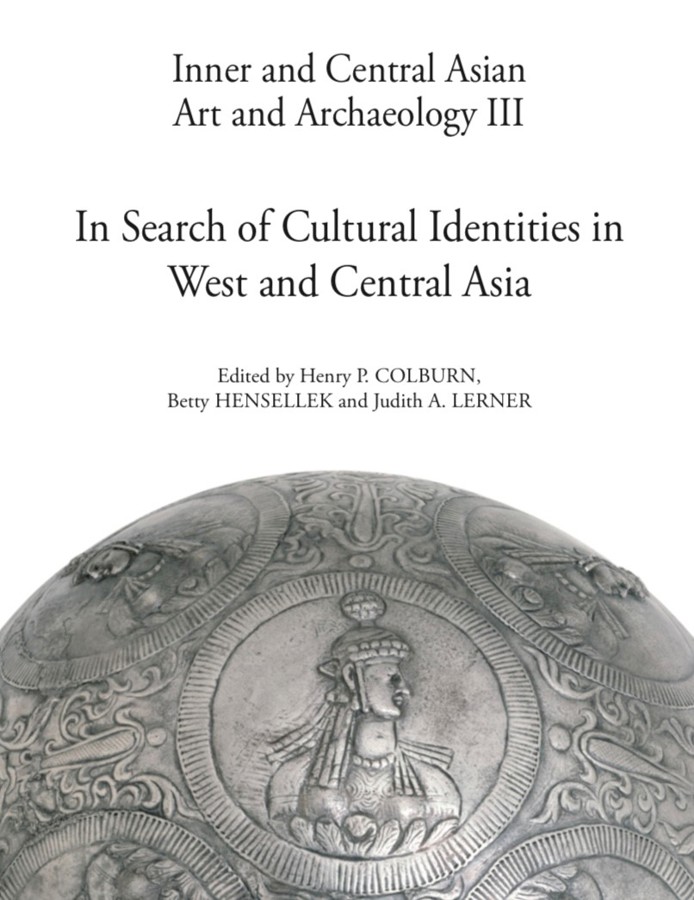
I am very happy to announce that In Search of Cultural Identities in West and Central Asia: A Festschrift for Prudence Oliver Harper now has a place on the Brepols website. For you visual learners out there, here is the cover:
The cover features a detail of a Sasanian bowl with female busts, 3rd-4th cen. CE (MMA 1970.5; Harris Brisbane Dick Fund, 1970).
I can claim no credit for designing the cover (though I did suggest the image), nor can I claim any responsibility for the contents, beyond some basic editing and organizational work. Instead, the real credit goes to my co-editors Judith Lerner and Betty Hensellek for envisioning the project, arranging publication and recruiting the contributors, and of course to the contributors themselves, who are listed on the Brepols page in the Table of Contents for the book.
Publication is expected by the end of the year. I am looking forward to it very much!
I was very distressed to learn yesterday that the recently discovered fresco from Pompeii depicting what some thought to be the first pizza is in fact a pomegranate focaccia (evidently Pompeii was the Roman equivalent of Brooklyn, filled with idiot foodie hipsters possessed of neither taste nor sense).
Borrowed from NPR
Why is this such a disappointment? Pizza means tomatoes, and tomatoes are a New World fruit. So if this fresco did indeed depict a pizza, it would be proof — irrefutable proof — that the Phoenicians had made it to Michigan or Tennessee, or that the Jews had made it to Arizona. Sadly, such proof is not forthcoming from this discovery, and instead we must await an Egyptian tomb painting depicting the first avocado toast.
I am not prone to self-aggrandizement, but this is my website, after all. Therefore, I am pleased to announce the publication of my latest [insert superlative here] article, ‘A Brief Historiography of Parthian Art, from Winckelmann to Rostovtzeff,’ in the Journal of Art Historiography. It is part of a special issue entitled ‘A Historiography of Persian Art: Past, Present, and Future,’ guest-edited by Yuka Kadoi and András Barati. I recommend checking it out — it includes a number of great articles (and also mine).
I’m famous! Well, not really. But I am in the latest issue of Archaeology magazine, quoted in a wonderful article about my old friend Udjahorresnet.
The man himself
The article is by Daniel Weiss, the editor of Archaeology, and is a lovely (and well-illustrated) distillation of the recent research on Udjahorresnet. I highly recommend it to anyone interested in Achaemenid Egypt or the Achaemenid Empire more broadly.
Gilbert, who studied at Paine College and Brown University and was on the Paine faculty for most of his career, was the first African-American to attend the American School of Classical Studies in Athens, and very likely the first Black person to engage in archaeological fieldwork in Greece. In fact, the book is filled with his ‘firsts,’ which Lee unfurls in a narrative that is both alacritous and at times near microhistorical.
Two things in particular struck me about this book. First, it paints a vivid and detailed picture of the world of classical scholarship in the nineteenth century. For example, it took Gilbert weeks to travel from Augusta, Georgia, to Athens, Greece. Where details about Gilbert are lacking, Lee uses contemporary information to illustrate what Gilbert might have seen or experienced. Second, I had no idea how important a classical education was for Black Americans after the Civil War. What for me is my particular brand of nerdiness was for them a mark of equality. Indeed, Gilbert was not unique among Black Americans in his pursuit of classical scholarship, though his achievements were certainly outstanding.
All this is to say that there was a gulf in my knowledge of the history of classical scholarship, which I did not even know existed before I read this book. Accordingly I recommend it unreservedly, as both an intellectual exercise and as diversionary reading. Gilbert makes for a compelling protagonist, and he certainly deserves to be better known. Thanks to Lee’s biography, perhaps now he shall be.
Next month I’ll be giving a talk at the British Museum at a member’s conference entitled ‘Great Civilisations: Greece and Persia,’ held in conjunction with the exhibition ‘Luxury and Power: Persia to Greece‘ (which I am very much looking forward to seeing). My talk is called ‘Persian Silver: The Power behind the Throne,’ which is a title devised by the BM, but it does aptly convey the idea that money and power were intertwined in the Achaemenid court, but not in an economic sense so much as in the context of prestige.
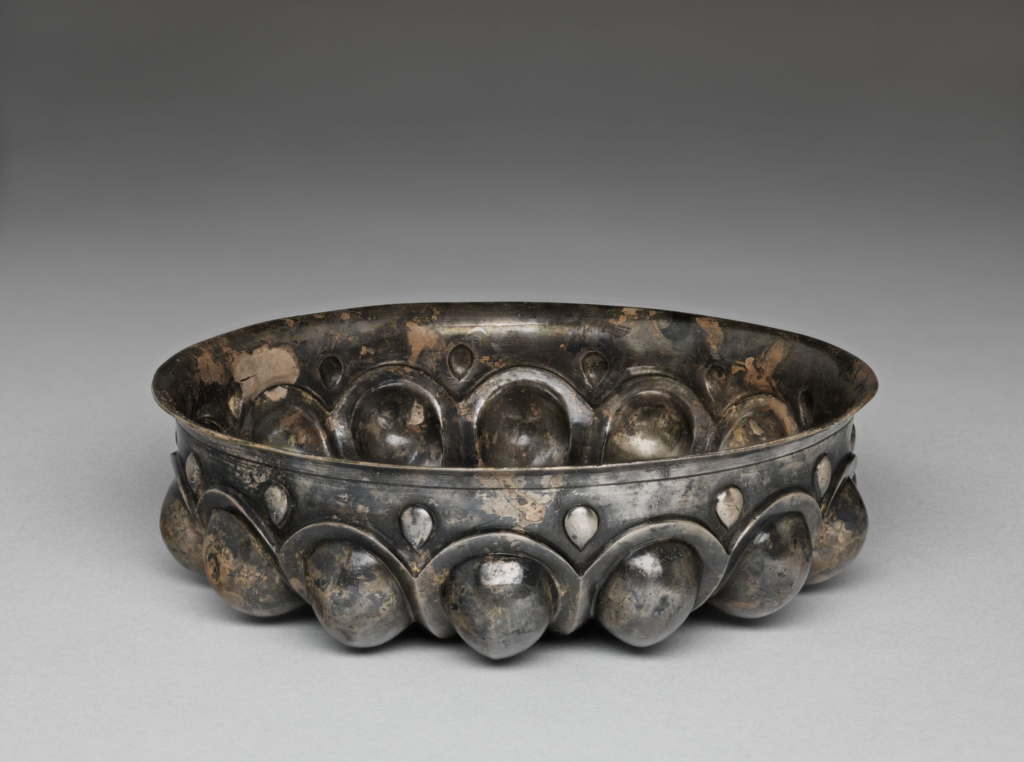
Shallow Bowl, Achaemenid period, 6th-4th cen. BCE. Silver. Harvard Art Museums/Arthur M. Sackler Museum 1979.357, Bequest of Frances L. Hofer.
This is really exciting for me, however, because I am on a program with many luminaries of the field, whom I respect and admire, including Paul Collins, St John Simpson and Tom Harrison, whom I last saw twenty years ago when I was an undergraduate at St Andrews and helped to set me on my current scholarly path towards the Persians. I am very much looking forward to seeing him again.
This spring I am teaching a course at Hofstra University entitled ‘Before Bitcoin: The Early History of Money’ (a title suggested by the History Department to get butts in seats, successfully I might add), and this past week we discussed Late Antique coinage, that is, the end (in more ways than one) of the monetary systems of the Greek and Roman worlds. In doing so I showed my students this coin:
Gold tremissis, Trier, Germany, ca. 383-388 CE; obv.: diademed head of Magnus Maximus; legend: ‘our lord Maximus Augustus’; rev.: Victory striding holding wreath and palm; legend: ‘victory of the Augustii’
I had never stopped to think about the emperor who minted it, one Magnus Maximus, literally ‘Great Greatest.’ As I remarked to my students, it sounds like he was named by Donald Trump. This ambitiously-named emperor made a bid for power in 383 CE, first deposing Gratian and then later, unsuccessfully, opposing Valentinian II and Theodosius I; he was executed in 388. What I did not realize at all was that he subsequently passed into Welsh legend, appearing in Geoffrey of Monmouth and The Dream of Macsen Wledig, in which Macsen, the Roman emperor, is led by a dream to Wales, where he meets his true love Elen. In his absence from Rome Macsen is overthrown and, with the help of his new Welsh allies, he re-conquers the empire, giving the Welsh Brittany in thanks for their service.
A king, thought to be Macsen Wledig, in the Llanbeblig Hours, 14th cen. (National Library of Wales)
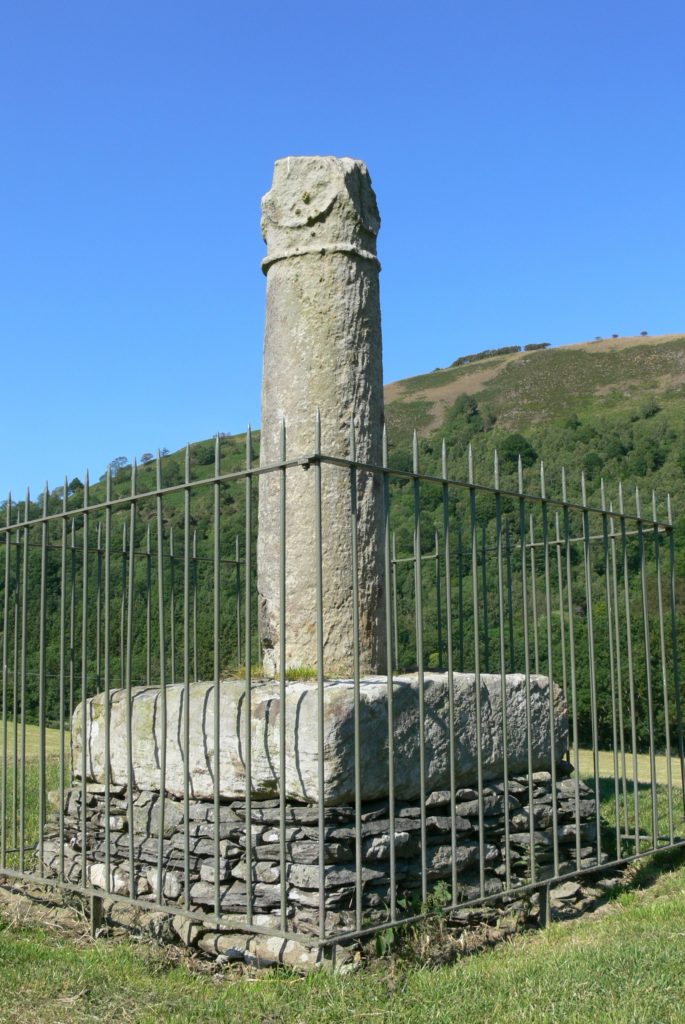
He was also claimed as an ancestor by various Welsh kings; for example, he appears on the 9th century Pillar of Eliseg as an ancestor of Cyngen ap Cadell (died 855), King of Powys.
The Pillar of Eliseg, Denbighshire, Wales, 9th cen.
Not a bad afterlife for a flash-in-the-pan emperor I barely knew existed!
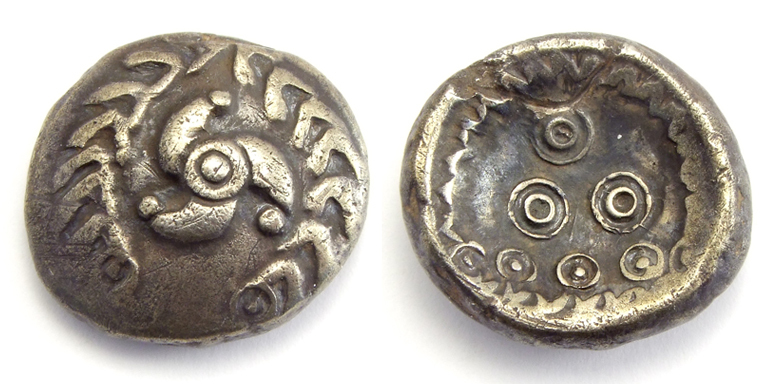
…is Regenbogenschüsselchen. It means ‘rainbow cups,’ and refers to concave electrum coins minted by the Celts. That explains the ‘cup’ part; ‘rainbow’ is because they were often found after heavy rainfall in plowed fields, that is, they appeared to be the pot of gold (alloy) that appears at the end of a rainbow.
I wonder if this contributed to the various myths about leprechauns. After all, ‘Rainbow Cups’ (like Lucky Charms) sounds like a disgusting breakfast cereal marketed towards children.
I do not much use the Twitter, except to find out when street cleaning is suspended in Jersey City. But today I was pointed to a ‘tweet‘ (as I understand it is called) by Michael Taylor at SUNY Albany lamenting our field’s truly regressive hiring practices, which is the main point he makes. I recommend it.
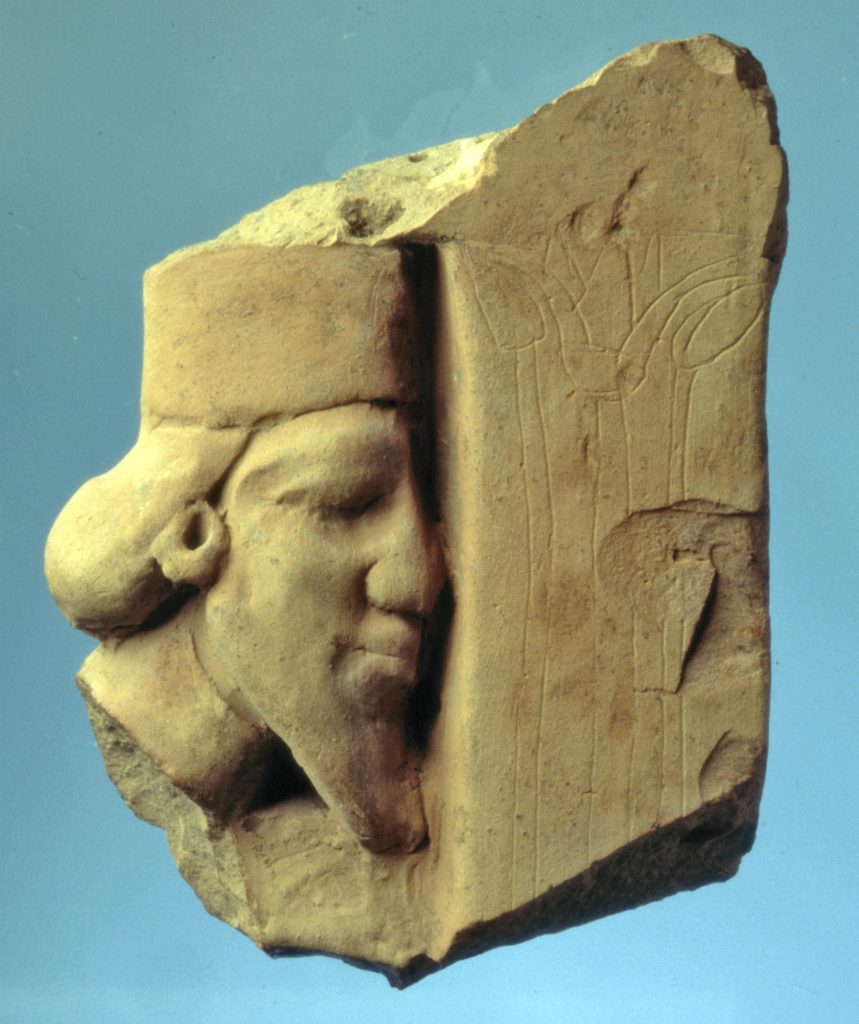
Next week I’m headed off to Los Angeles for the first Achaemenid Workshop at UCLA’s Pourdavoud Center, entitled “Identity, Alterity, and the Imperial Impress in the Achaemenid World.” My talk is entitled “How (Not) to Find Persians in Egypt,” and considers why it is so goldarn hard to conclusively identity Persians in Egypt from epigraphic and archaeological sources.
I might talk about this guy (Allard Pierson Museum 07199)