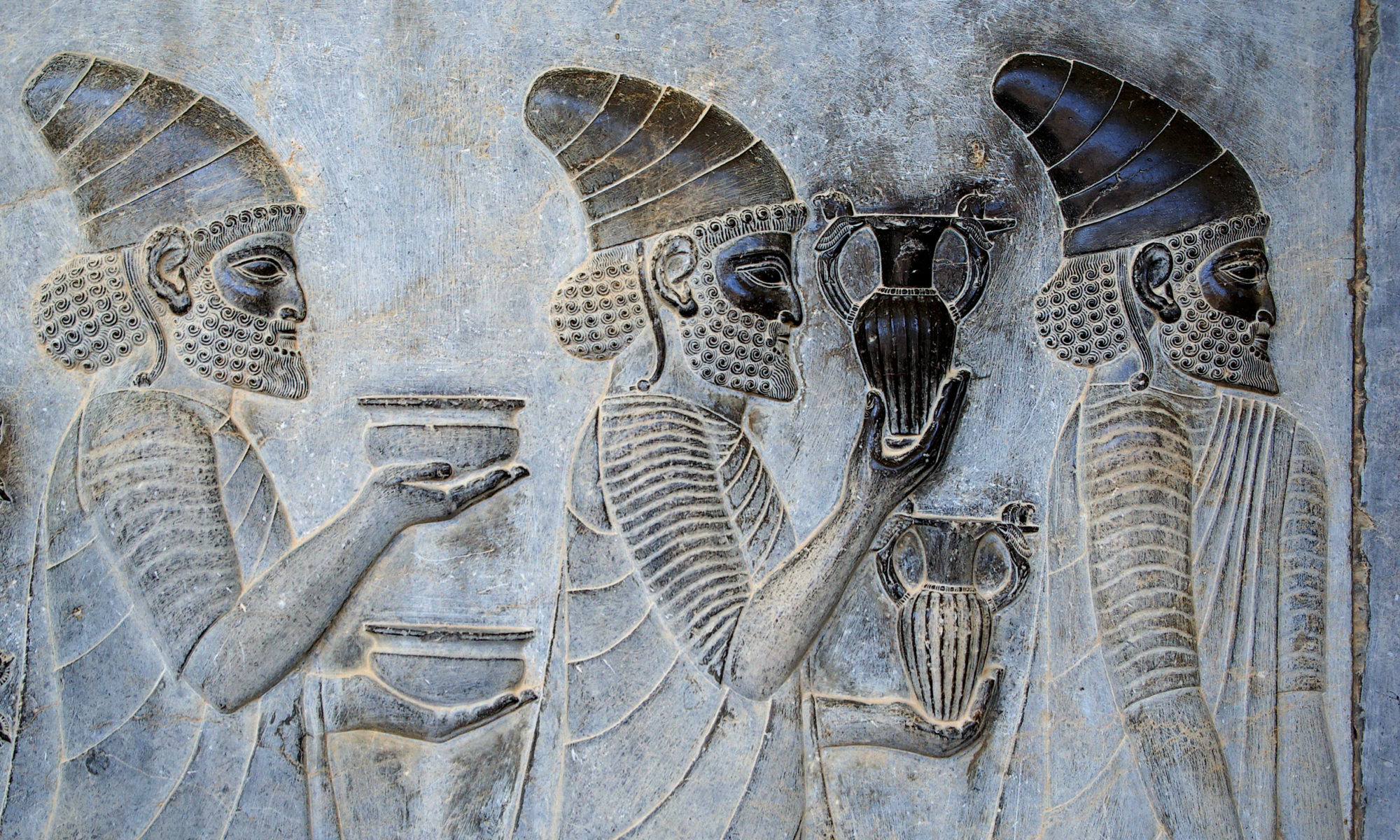
Next week in Dura-Europos!

Despite the title of this post, I am not going to Syria next week (at least not physically). Instead I am going to Connecticut. I am attending the conference Dura-Europos: Past, Present, Future at the Yale University Art Gallery.
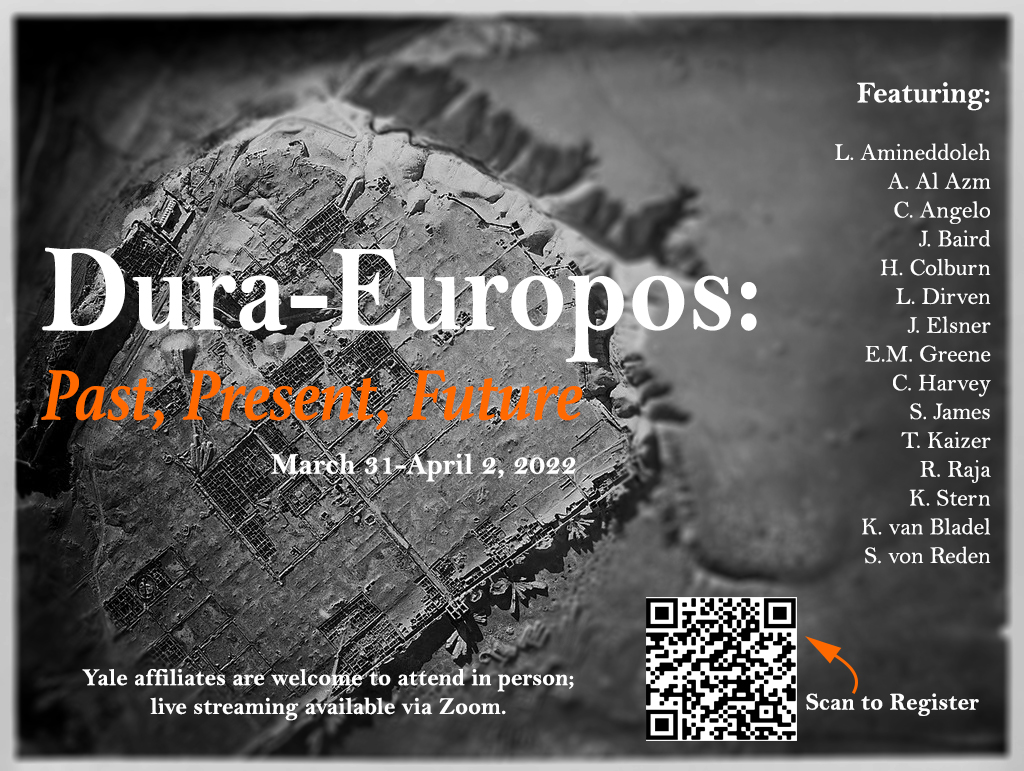
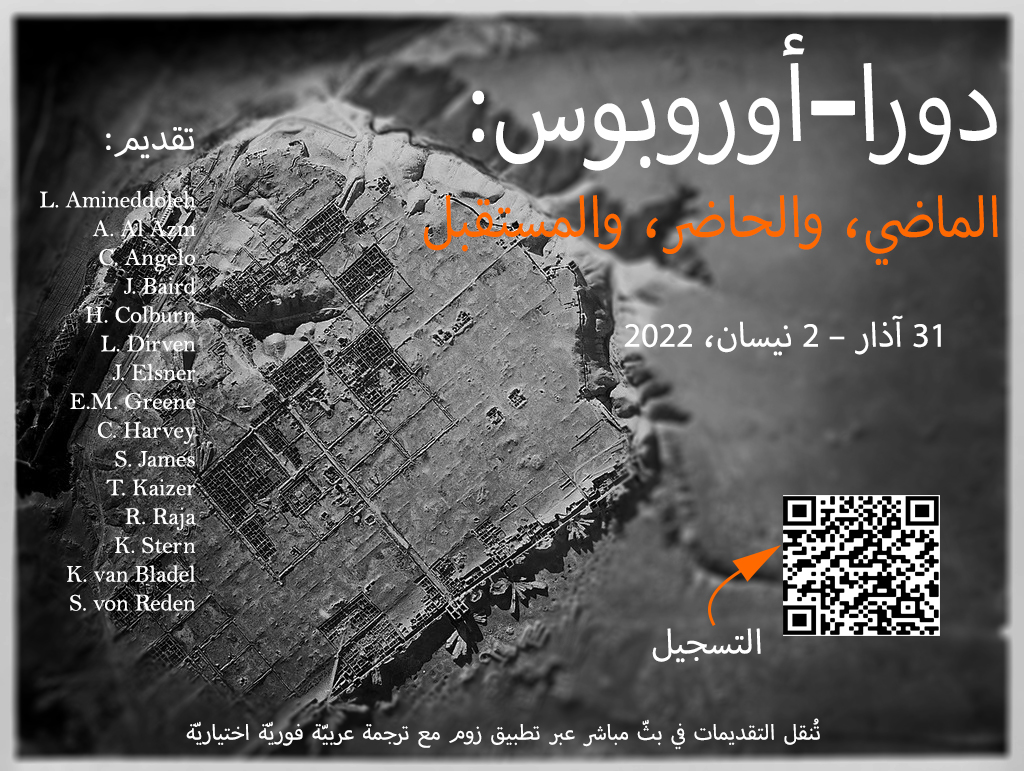
I’ll be giving a talk, growing out of my current research project on Mikhail Rostovtzeff, entitled “‘Dura and the Problem of Parthian Art’ (almost) a Hundred Years Later.” It’s a vague title to be sure (since when I provided the title I wasn’t yet sure what the talk would be about!), but I will focus on why Rostovtzeff’s essay ‘Dura and the Problem of Parthian Art’ is still important for the study of ancient Iranian art, even though the details of his argument have long since been superseded.

I am looking forward to the conference very much, but I am also intimidated by sharing a panel with Jaś Elsner! It’s like I’m George Thorogood opening for the Rolling Stones in 1981. Not that I mind in the least being George Thorogood; in fact, I like to drink ‘the George Thorogood:’ one bourbon, one scotch, and one beer.

The First Strike

Much as I enjoy it, this post is not about the Jackie Chan movie (although I recommend it wholeheartedly). Instead, I wish to commend to you a post by my friend Jenny Cromwell (a papyrologist at Manchester Metropolitan University) on the first labor action in recorded history, carried out by the workmen at Deir el-Medina during the reign of Rameses III (ca. 1184–1153 BCE). The workmen, who were responsible for building and maintaining the royal tombs in the Valley of the Kings and the Valley of the Queens, went on strike because they had not been paid, and since the Egyptian economy at that time worked primarily on the basis of staple finance, wages were paid in food. Jenny’s post is a concise and interesting read that makes good sense of difficult evidence, and I recommend it unreservedly.

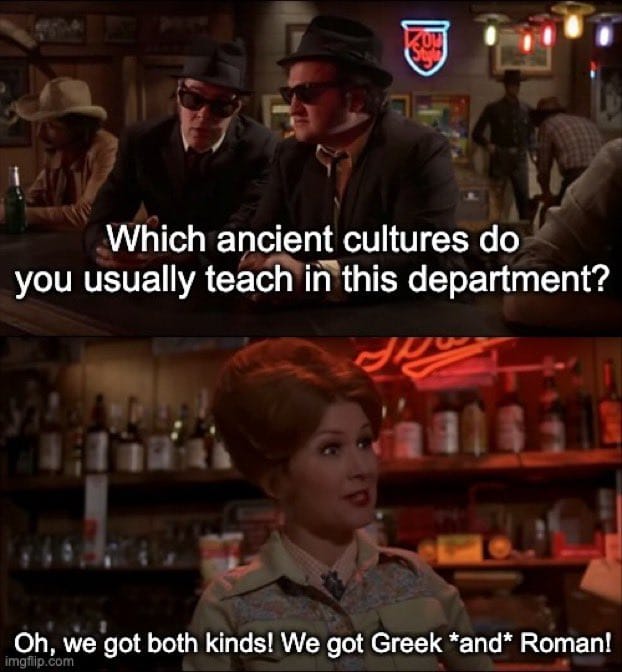
(I couldn’t resist)

Mining Nose Gold

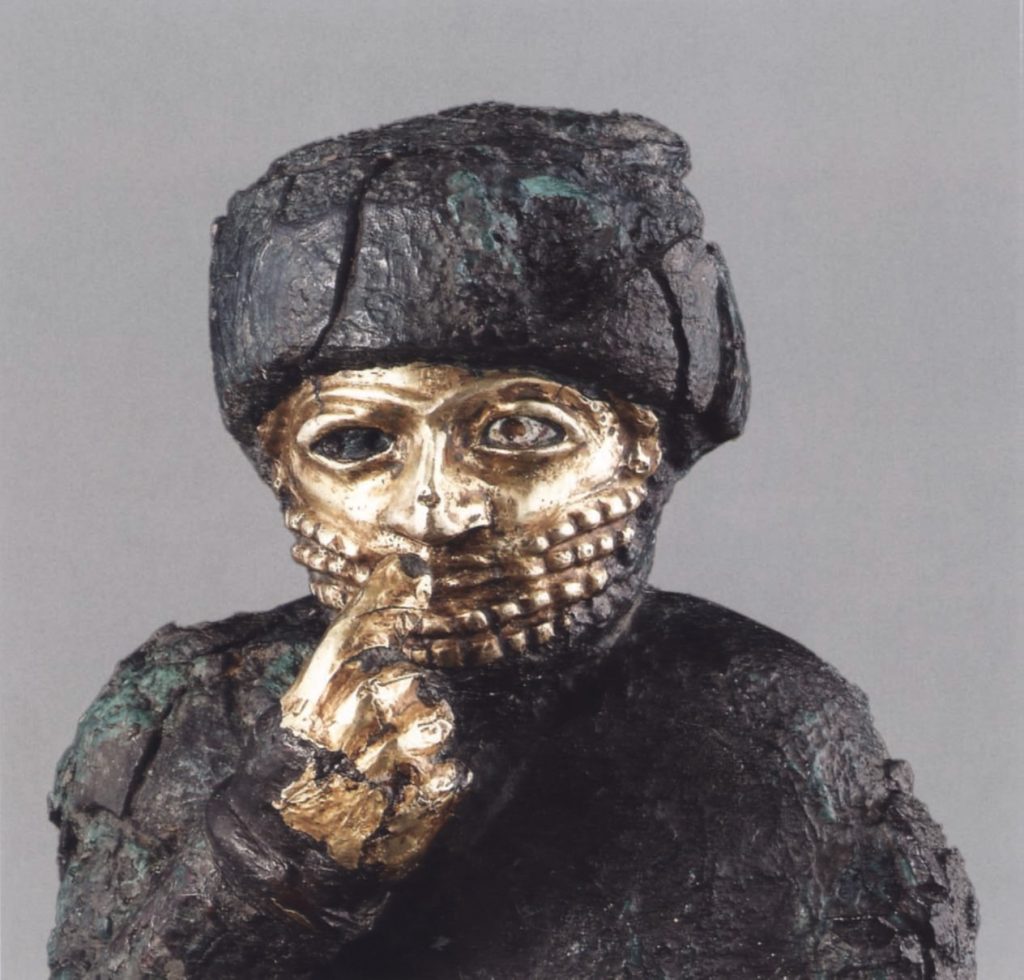
Today I report another startling new discovery: the earliest evidence (to my knowledge) of nose-picking. This is an Old Babylonian votive statue (ca. 1760 BCE) in the Louvre, which is said to have been found at Larsa. While that provenance is of dubious value, the iconography speaks for itself:

Old Babylonian Votive Statue, ca. 1760 BCE. Bronze, gold and silver; H. 19.6 cm. Louvre AO 15704.

The Late Bronze Age

I have just made a stunning discovery: in the 1980s there was a surrealist band called The Late Bronze Age. The group was led by the self-styled Colonel Bruce Hampton (ret.), formerly of the Hampton Grease Band, who went on to form The Aquarium Rescue Unit, The Codetalkers, and The Quark Alliance. The group released two albums, Outside Looking Out (1980) and Isles of Langerhan (1982). The New York Times called them “unabashedly weird.”

Outside Looking Out (1980)

Perhaps I can find a theme song for one of my classes…

New Publication on Achaemenid Africa

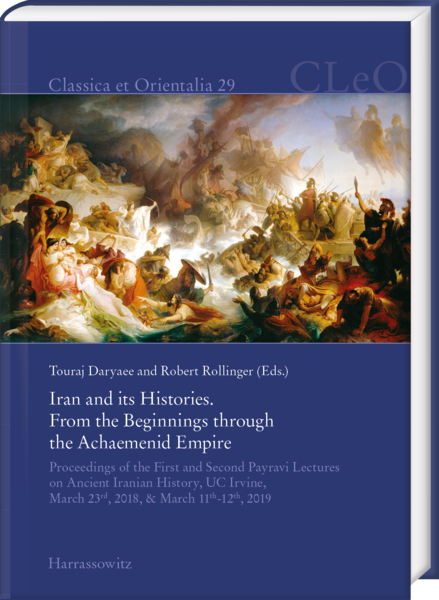
I’ve been meaning to announce this for a while now, but other, pesky things, like spending time with my family over the holidays, got in the way. So here it is: last November my paper “‘The Spear of the Persian Man Has Gone Forth Far:’ The Achaemenid Empire and Its African Periphery,” was published in Iran and Its Histories: From the Beginnings through the Achaemenid Empire. Proceedings of the First and Second Payravi Lectures on Ancient Iranian History, UC Irvine, March 23rd, 2018 and March 11th-12th, 2019, edited by Touraj Daryaee and Robert Rollinger and published by Harrassowitz Verlag in the Classica et Orientalia series.

It’s an attempt to contextualize Egypt, Libya and Kush in their broader Achaemenid setting, using world-systems analysis as conceptual glue to hold them together. It also includes, thanks to a very strider anonymous peer reviewer, my first explicit attempts to explain how we can use Herodotus to study the Achaemenids (it was a very useful exercise for me to think this through).

I know what you’re going to say: there’s no such thing as ‘Achaemenid Africa,’ since ‘Africa’ is a Latin term, probably derived from Punic (as I said myself in a recent post). That is true. But it is still a convenient shorthand for talking about Achaemenid territories on the African continent, which despite not being innately or cogently ‘African’ per se (whatever that means) are still unified by geography and politics, which is one of the points I (try to) make in this paper.

The whole volume is very impressive, and I am very grateful to Touraj for the invitation to participate in one of the conferences that generated it back in 2019. Although I’m moving away from Egypt in my scholarship, this was a sufficiently different undertaking from my dissertation/book to pique my interest. I hope the result is worthwhile!

What Is (a) God?

I’m afraid this tantalizing title belies a prosaic announcement, namely that this spring I am teaching a course in the NYU Liberal Studies sequence Arts and Cultures across Antiquity, entitled What Is (a) God? (To be fair, I borrowed the title from a book edited by Alan Lloyd.) The course is an exploration of the nature of the divine across the ancient Middle East and Mediterranean, including Egyptian, Mesopotamian, Persian, Greek, Roman and Gandharan art, as well as Atrahasis, the Hebrew Bible, the Avesta, Homer, Euripides, Ovid, Philostratus and the New Testament. I’m still working out the details, but it should be a fascinating course (for the students too, I hope!).

But what is ‘Africa,’ anyway?

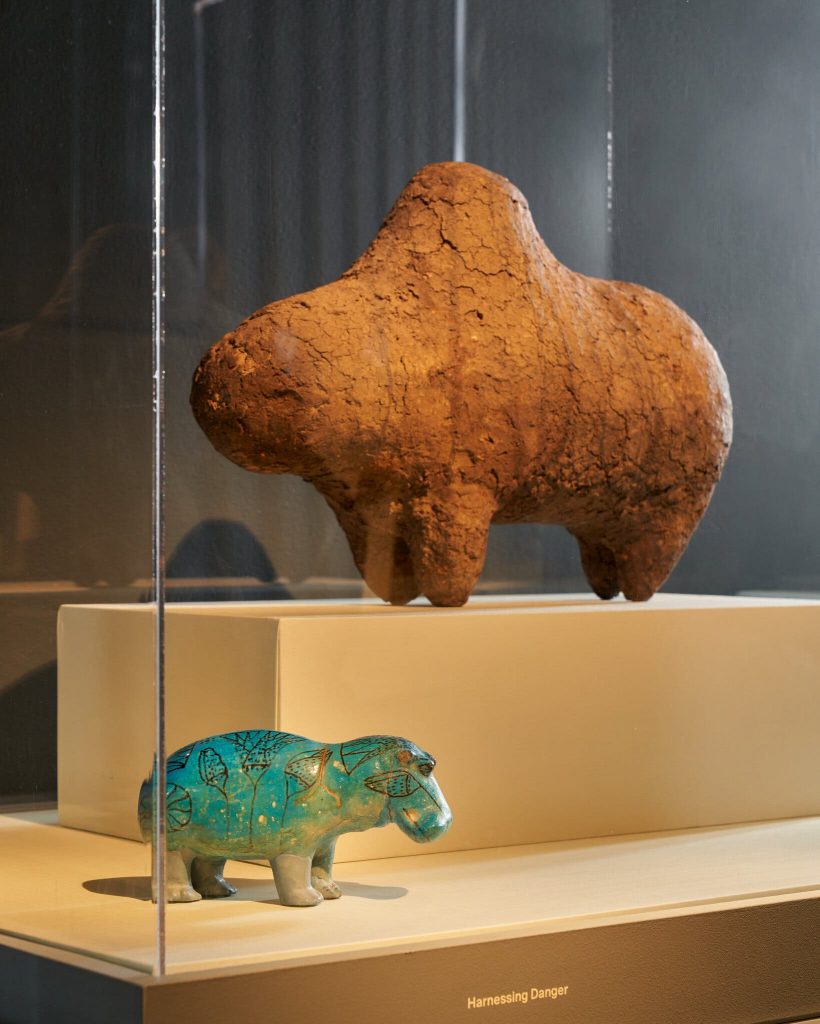
A New York Times review by Holland Cotter of the Met’s new exhibition ‘The African Origins of Civilization,’ which pairs African and ancient Egyptian sculptures (and some objects elsewhere in the museum) makes an important point, I think, namely that the division of Egyptian and African art in the Met and other museums is a result of a racist distinction between ‘civilized’ and ‘primitive’ art. In fact, the Met’s collection of African art largely originated from its acquisition of the collection of Nelson Rockefeller’s defunct ‘Museum of Primitive Art’ in 1976. The exhibition, therefore, renders an important service by putting these materials side by side, to the benefit of both.

Left: Hippopotamus, ca. 1961–1878 B.C. Egyptian (17.9.1)
Right: Power Object (Boli), first half of 20th century. Bamana artist; Mali (1979.206.175)
(Image shamelessly borrowed from the New York Times)

But Cotter’s broader point, that African art ought to be reunited in the museum, ignores the fact that ‘Africa’ is itself a European concept. The term comes from the Latin word Afri, which refers to the inhabitants of North Africa, and probably originates from a Carthaginian or Berber term. While it is true that many ancient Greek geographers regarded the Nile as the boundary between Asia and Africa (which they called ‘Libya’), some, such as Strabo (1.2.28), preferred the Isthmus of Suez, i.e. the recognized modern dividing line. Thus the entire question of whether Egyptian art is African is itself couched in European terms! If continents are a European construct, then surely it does not matter.

In this regard, I think the Met takes a sensible approach with this exhibition. Pairing African and ancient Egyptian art makes us (its viewers) ask questions like “What do these objects have in common?” and “What is Africa, anyway?” These are good questions to ask, even if they don’t have simple answers.

World Architecture and Society

Today I am pleased to announce the publication of World Architecture and Society: From Stonehenge to One World Trade Center, edited by Peter Louis Bonfitto and published by ABC-Clio. This book contains short essays on a huge number of structures, buildings and monuments, with the explicit goal of situating their architectural features within the social fabric of the societies, past and present, that created and used them.

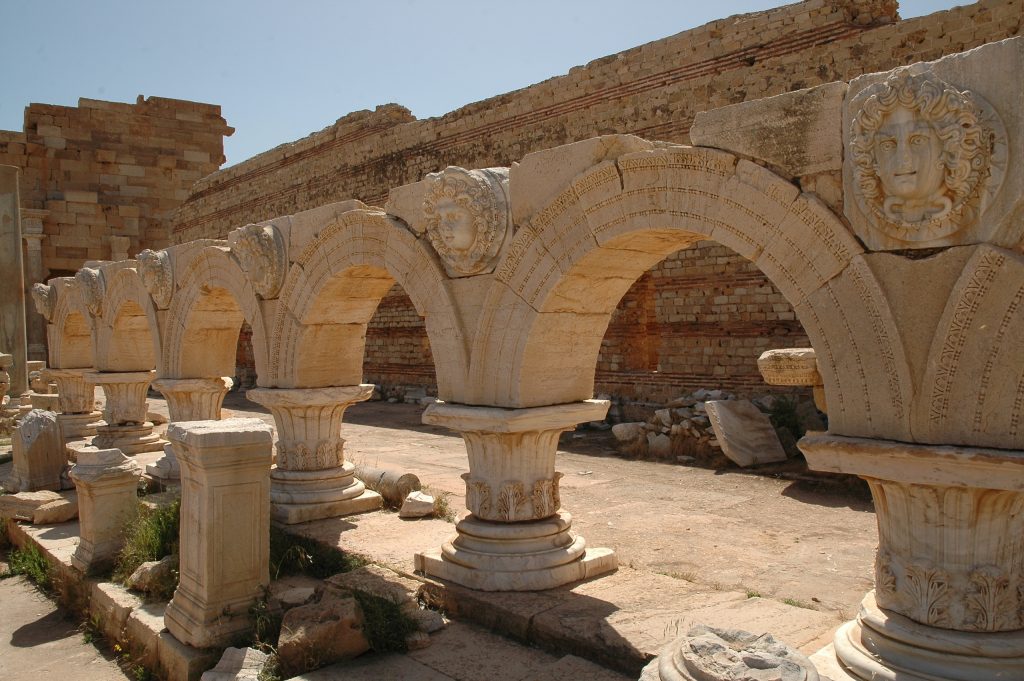
The Severan Basilica, adjoining the forum at Lepcis Magna, Libya, dedicated in 216 CE (Wikidmedia Commons)

I have contributed three essays, on the Ziggurat of Ur, the Apadana at Persepolis, and the Severan Forum at Lepcis Magna. The first two are obvious choices given my interests and expertise, but Lepcis Magna was my suggestion too. I think it’s great because 1.) it’s visually stunning, 2.) it was built in Africa by an African emperor, 3.) it is Roman in form, and clearly responding to structures and spaces in Rome, like the Forum of Trajan, and 4.) it is not a slavish copy of Roman architecture but rather a version of it, one which in many respects prefigures important features of medieval European architecture (just look at that colonnade).

Reconstructed colonnade in the Fortum of Lepcis Magna, Libya, dedicated in 216 CE (vici.org)

I reckon this proves I’m still a classical archaeologist after all!