J. A. Baird’s Dura-Europos

My time at the Bard Graduate Center, sadly, is nearly at an end. But despite my medical interlude, this time has been very productive for me and has effectively jumpstarted my project on Parthian art and Dura-Europos. It is therefore an opportune moment to reflect on one of the most valuable resources I have used this fall: J. A. Baird’s wonderful book Dura-Europos (Bloomsbury, 2018).
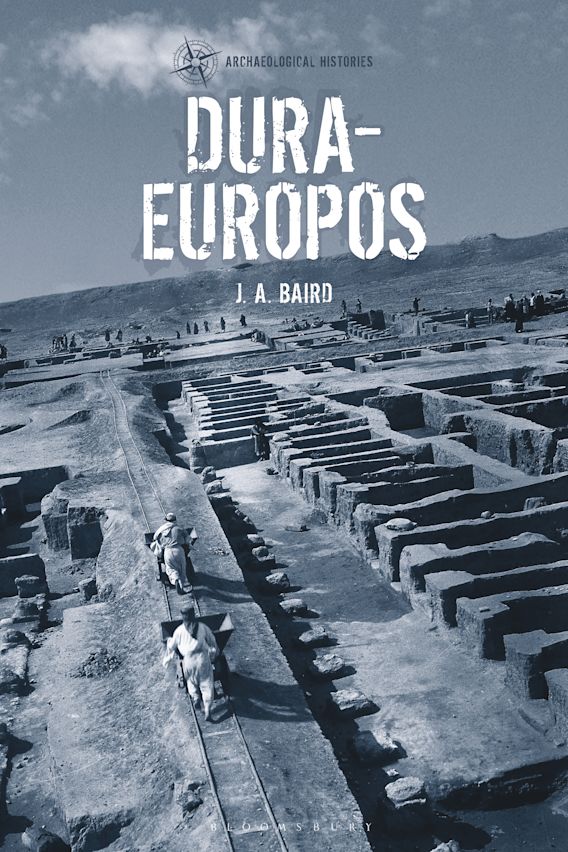
I like this book especially for three reasons:

1.) It does not oversimplify. Despite its extensive excavation, Dura-Europos is a pretty complicated site. Baird embraces this, but still writes lucidly about the complications.

2.) It pays close attention to the orientalist and colonialist contexts in which Dura-Europos was excavated in the 1920s and 30s. This is important because these contexts informed the interpretation of the site by Breasted, Cumont, Rostovtzeff, Hopkins et al., which in turn has been the basis for all future scholarship on it.

3.) It treats Dura-Europos as a Parthian site. One of the peeves on which I am building my current project is that Dura is usually understood mainly from a Roman context. While there are good reasons for this, it was also a Parthian site for most of its history. Baird’s treatment is therefore very useful for my project, and I feel less like a lunatic yelling at the moon (though not much less, but that is a separate matter).

Baird has worked on Dura-Europos for more than ten years. I’m a little intimidated by that, since I’ve worked on it for a few months at most. To some extent it makes me feel like I have no business writing about the site at all. But, paradoxically, it is Baird’s long experience that has enabled me to do my project, since I can build with confidence on foundations she has laid. It is a good example of how depth and breadth are both necessary in the field of archaeology.
No More Sacklers

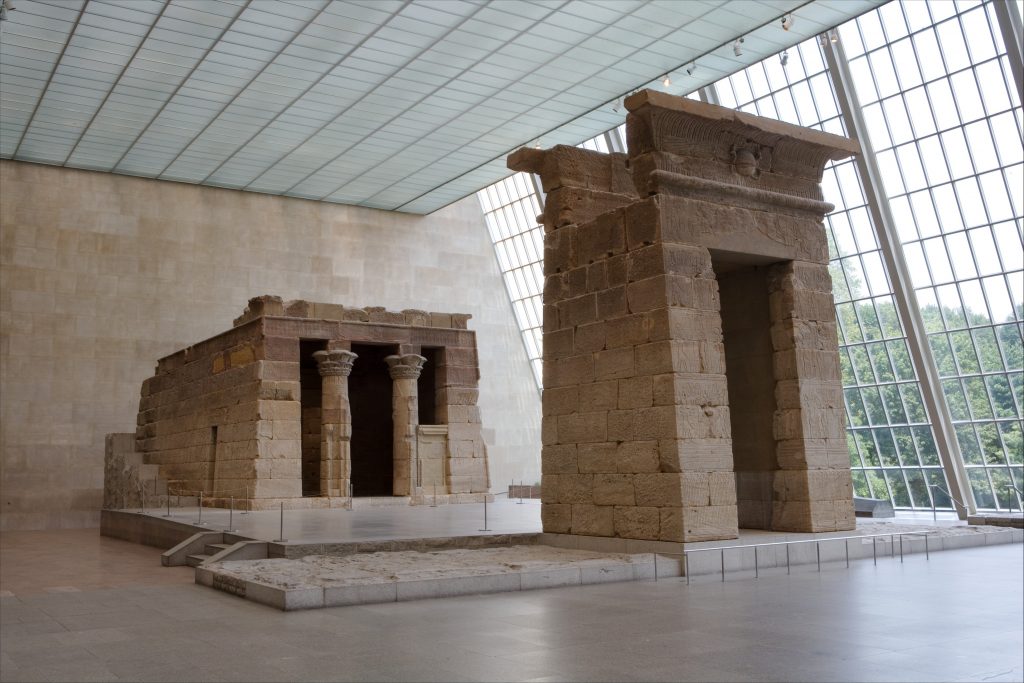
A few days ago the Met announced that the Sackler name would be removed from several endowed galleries, including the Sackler Wing which houses the Dendur Temple and the Assyrian sculpture court.

The Temple of Dendur (ca. 10 BCE) in the Sackler Wing, Metropolitan Museum of Art

I applaud this decision. The Sacklers, like Andrew Clay Frick before them, profited from the misery and suffering of others, and their donations to the Met and other museums, while very welcome, are essentially the ethics equivalent of money laundering. Of course, the Sacklers haven’t given the Met any money in a long time, so this was perhaps an easy decision for the Met, but I think it sets an important precedent, especially for an institution that is so dependent on donors and so resistant to change.

In memoriam Antonio Invernizzi (1941-2021)

Today I learned of the death of Antonio Invernizzi, an archaeological titan. Prof. Invernizzi was a champion of Near Eastern art and archaeology, especially following the time of Alexander — a period very much in need of a champion! He excavated at both Seleucia-on-the-Tigris and Old Nisa, making him one of the foremost experts on the Parthians (a topic close to my heart, especially these days). He was also a prolific scholar and teacher, helping to train a generation of archaeologists which is now illustrious in its own right.

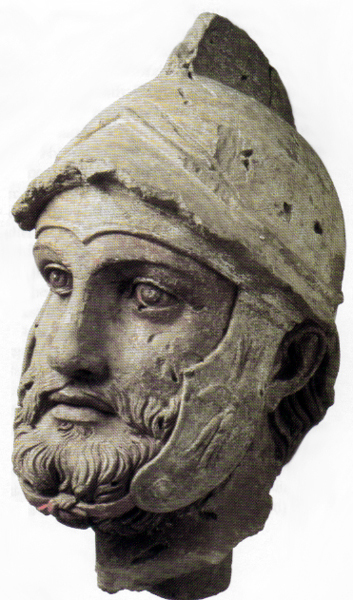
Since I don’t have a picture of Prof. Invernizzi, I instead share an image of a clay sculpture from the Square House at Old Nisa, an object which he published and helped to publicize, to all our benefit.

Clay sculpture from the Square House, Old Nisa, Turkmenistan, ca. 1st cen. BCE.

Taking all bets!

Today I report the startling news that there is now yet another successor to Famae Volent, Famae Restitutae. My feelings about these sites are well known to anyone who has read my job guide, and I have no reason to expect this one to be any different. So I wager that by mid-December it will have descended into right-wing protests of the apolitical nature of the classics, with a healthy dose of racism for a good measure.

I’m okay!

This site has been quiet lately, mainly because I’ve been in the hospital. Twelve years ago I had an aortic valve replacement to correct a congenital defect, and three weeks ago the replacement valve gave out entirely. So, after enjoying a fine Oktoberfest with some friends, I took myself to the ER. A week later I had my second valve replacement. I am happy to report that the worst parts of this experience have been a) hospital food, b) hospital beds, c) anemia, d) how much my wound itches as it becomes a scar, and e) not being able to lift anything heavier than five pounds. It’s maddening! But it beats the alternative.

Marble relief of Nergal from Hatra. 89.0 x 74.0 cm. Formerly Mosul Museum. Public domain image from Wikimedia Commons. (This has nothing to do with my medical condition; I just like it.)

New Parthian shot article

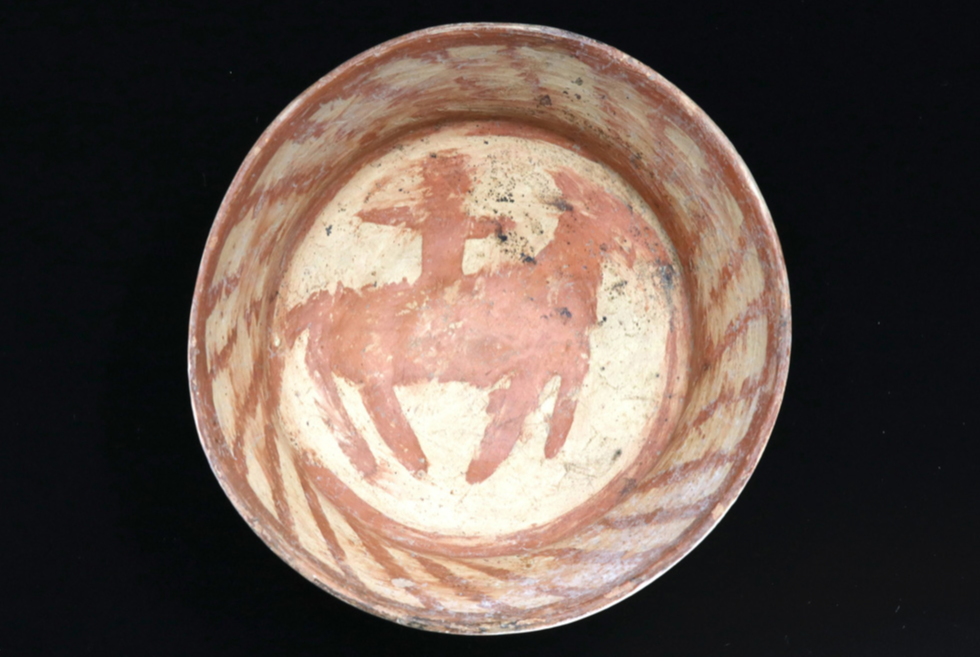
Today my paper ‘A Parthian shot of Probable Arsacid Date’ appeared in Dabir, the open-access journal published by the Jordan Center for Persian Studies at the University of California, Irvine. It is an object study of a ceramic bowl in the Met, which I argue is the only known example of the Parthian shot motif that may actually date to the Parthian Empire! (The dating is not as precise as I would like, unfortunately.)

Bowl, c. 4th-2nd cen. BCE. Terracotta; H. 5.8 cm; Diam. 16.0 cm. Metropolitan Museum of Art 66.205.2; gift of Mehdi Mahboubian.

New essay on Achaemenid money

My short essay on Achaemenid money, entitled “Von Silber und Getreide – Zahlungsmittel und Wirtschaft im Achämenidenreich,” has appeared on my door in its corporeal form. I originally wrote it for an exhibition at the Badisches Landesmuseum Karlsruhe, but thanks to (ex-)President Trump, the exhibition was cancelled (and to be fair, the pandemic probably would have done it in too). Fortunately the exhibition’s organizers Julia Linke and Silke Hockmann converted the catalog into a book for the Zaberns Bildände zur Archäologie entitled Die Perser: Am Hof der Großkönige (Julia also translated my text into German, for which I am very grateful). It has also been published simultaneously (with identical pagination) as a Sonderheft of the magazine Antike Welt.

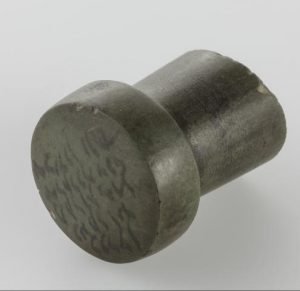
In my essay I try to give an overview of the different forms of money in the Achaemenid Empire, including coins (even though there was no imperial coinage per se), bullion, grain, geese and even chert.

Inscribed pestle from the Persepolis Treasury, Iran, ca. 478-466 BCE. Chert; L. 4.5 cm; Diam. 3.5 cm. Chicago, Oriental Institute Museum A23201.

The book is beautiful! I’m looking forward to reading the rest of it.

Another sad episode in the history of Classics

Over the weekend there was minor episode on the Classics Jobs Wiki that further adds to my disgust with classicists. Someone decided to segregate the job postings into an unnamed main category and another labeled ‘Classics Adjacent.’ The latter category includes mainly philosophy, Near Eastern studies and history jobs that encompass ancient history but do not focus on it. There was some pushback; old timers on the site (like me) noted that these jobs had always been on the wiki and that one random individual is not empowered to decide what is and is not ‘classical.’

How does it possibly affect the usefulness of the site or hurt anyone to include these jobs? It is true that some of them will definitely not go to classicists (i.e. people with degrees in classics as opposed to philosophy or political science), but that has always been the case. One user suggested that the ‘adjacent’ jobs should include those that require a degree in a field outside of classics, but this too is unhelpful, since there are many interdisciplinary or joint degree programs. Also, many successful candidates ultimately do not fit the job descriptions in ever respect, even the ‘required’ qualifications. Anyone who has been on the market as long as I have would know that (perhaps I am showing my age here).

It makes me sad to see bigoted and chauvinist classicists. There was a time when classics was an ecumenical field — look at Rawlinson, Meyer, Rostovtzeff, Cumont, Nock and M. L. West, to name a few. It’s depressing to see the younger generation trying to limit its scope, for no appreciable purpose.

Rostovtzeff’s sense of humor

Another gem from my research into Rostovtzeff’s life is this remark of his, in a 1938 letter to his friend Pitrim Sorokin (a fellow Russian émigré the founder of Harvard’s Department of Sociology), recalling his initial difficulty in attracting students at Wisconsin and Yale,

“In spite of all the comic aspects of my personality, which I understand more than you think: a curious external appearance, exotic manners, a strong accent, and a large number of mistakes in my English. All this remains and grows even more rather than less.”

Rostovtzeff’s students in Madison came to like him and even called him ‘Rough Stuff’ (in part because of the difficulty of pronouncing his name). And evidently he was successful at Yale too, where the university retained him even after his retirement as a professor. But this letter seems to reveal a combination of wit and sadness that seem characteristic of Rostovtzeff and it provides (for me, anyway) a telling insight onto his personality.

(This letter is courtesy of G. Bongard-Levin and G. W. Bowersock, “Rostovtzeff and Harvard,” Philologus 140 [1996], 340-4; they also provide Sorokin’s reply at 344-5.)