A curt job offer

My research on Rostovtzeff has turned up an interesting detail, namely the text of his job offer from the University of Wisconsin, sent via cable January 3, 1920:

“University Wisconsin history department offers professorship for academic year beginning September subjects elementary ancient history Russian history and research salary five thousand dollars and five hundred for travel Paxson.”

Rostovtzeff replied on January 6:

“Thankfully accept offer. Writing. (Signed) Rostovtzeff.”

According to rumor, Rostovtzeff then took an atlas from the shelf to see where Wisconsin was.

(I found the cables in M. A. Wes, Michael Rostovtzeff, Historian in Exile, Stuttgart, 1990, 47-8. Rostovtzeff’s time in Madison is usefully discussed in G. W. Bowersock, “Rostovtzeff in Madison,” The American Scholar 55.3, 1986, 391-400.)

In memoriam Elizabeth A. Clark (1938-2021)

It is quite unfortunate that I am so often in a position to memorialize recently departed scholars and actors (and the occasional baseball player) on this site, but I never want to miss an opportunity to say why I think someone mattered. Today I would like to remember Elizabeth Clark, an expert on early Christianity. I know Prof. Clark only from her phenomenal book History, Theory, Text: Historians and the Linguistic Turn (Harvard University Press, 2004). This book is essentially a historiographic study of historical thought, from Rankean objectivism to Foucauldian postmodernism. The beauty of it is that the reader takes this entire intellectual journey himself, seeing what each succeeding scholarly paradigm has to offer as an improvement on its predecessor. I highly recommend this book to any historian (i.e. anyone working on any period).

In memoriam Michael K. Williams (1966-2021)

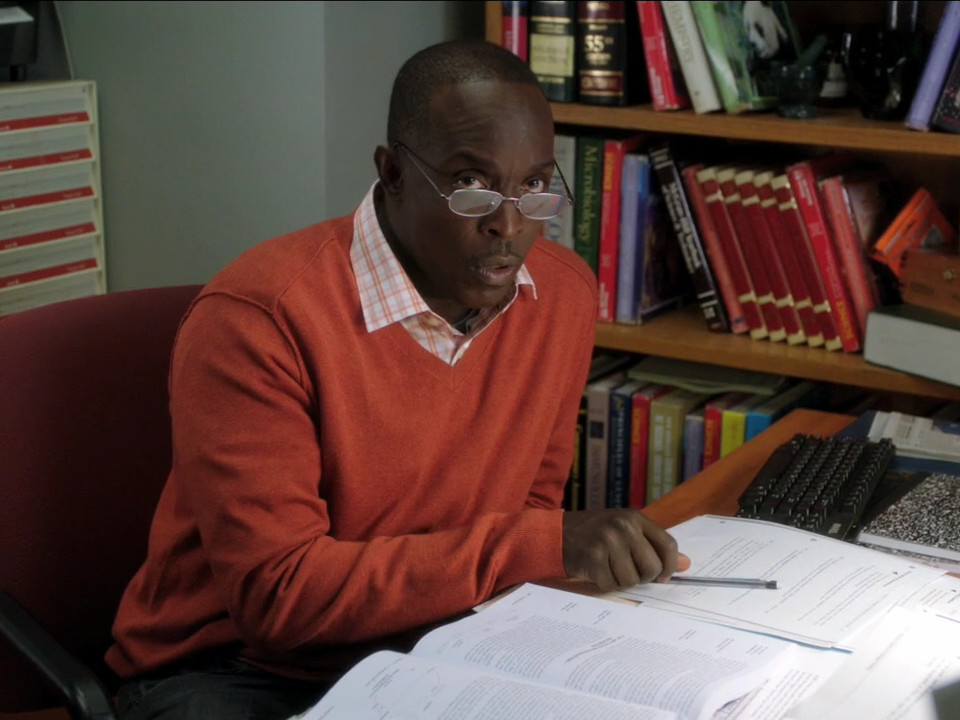
I am very sad to learn of the death of Michael K. Williams, whose character Omar Little was one of my favorites on The Wire (and I am not alone in that regard). I especially loved his unusual combination of menace, Zen and cheerful whistling, as well as his fierce independence. But I also really enjoyed his performance on Community as Marshall Kane, a biology professor who earned his PhD while in prison. He was hilariously solemn, something which I, as an educator, aspire to myself. He will be sorely missed.


New fellowship

As of today, I am a fellow at the Bard Graduate Center in New York (just across Central Park from the Met), working on a project concerning Mikhail Rostovtzeff and the study of Parthian art. More details to follow — especially as the project begins to take shape!

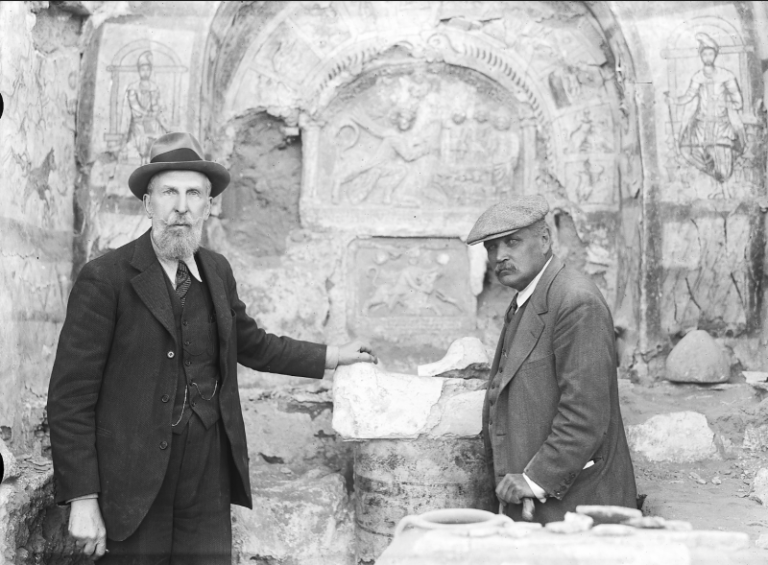
Franz Cumont (left) and Rostovtzeff (right) in the Mithraeum at Dura-Europos, 1933-4 (Yale University Art Gallery)

The most expensive colleges in America

CBS has compiled a list of the 50 most expensive colleges and universities in America, according to data from the National Center for Education Statistics. Most of the institutions on the list are no surprise. Number 1 is the University of Chicago (‘where fun goes to die’), Columbia is #2, Brown is #7, USC is #8, Penn is #9 and Dartmouth is #10. Yale, Cornell and Stanford are on the list too.

The real surprises, however, are twofold. First, several schools of middling repute were also on the list. For example, Fordham is #13, Occidental College is #19, Franklin and Marshall College is #30, Pepperdine is #35 and Santa Clara University is #44.

Second, Harvard, Princeton and Johns Hopkins are not in the top 50, nor are any public universities, such as Michigan, Berkeley or UCLA.

The real lesson here, I think, is that cost is not directly proportional to a school’s reputation. Of course, a school’s reputation and the quality of the education is provides are entirely different things, but when going into the workforce or applying to graduate school, reputation does matter. So it’s important to attend the best school — in terms of quality and reputation — that you can afford, and not to use price as a proxy for either.

Professors don’t make much money

The American Association of University Professors released its Annual Report on the Economic Status of the Profession last month. It is grim. For one thing, real wages (i.e., wages adjusted for inflation) actually decreased for the first time in over a decade. And that’s wages for full-time faculty. Second, 63% of faculty are contingent (i.e., on fixed-term contracts rather than on a tenure-track or tenured). Third, the average pay for part-time contingent faculty (i.e., adjunct professors) is $3552 per course. For most schools, a typical full-time teaching load is two or three courses, meaning that the adjunct who is lucky enough to cobble together a full teaching load can expect an average annual salary of $14,208 to $21,312, without benefits of course. I myself have managed to get three courses at The Cooper Union, at $3000 per course, though fortunately this is not my only revenue stream at present and I get benefits from my wife’s job. But if I were unmarried or saddled with massive student debt, I’d probably be living with my parents or out of academia altogether.

I mention this because when I was a student, I never thought about how much professors make, because a) I didn’t even know about the existence of contingent faculty, and b) I thought I didn’t need much money, so salary was unimportant. I’m sure other students considering grad school in archaeology are similarly uninformed, so I offer this report as an antidote to such misapprehensions. Some people do get lucky, but for most academia is a slow road to financial ruin.

Bring back the Cleveland Naps

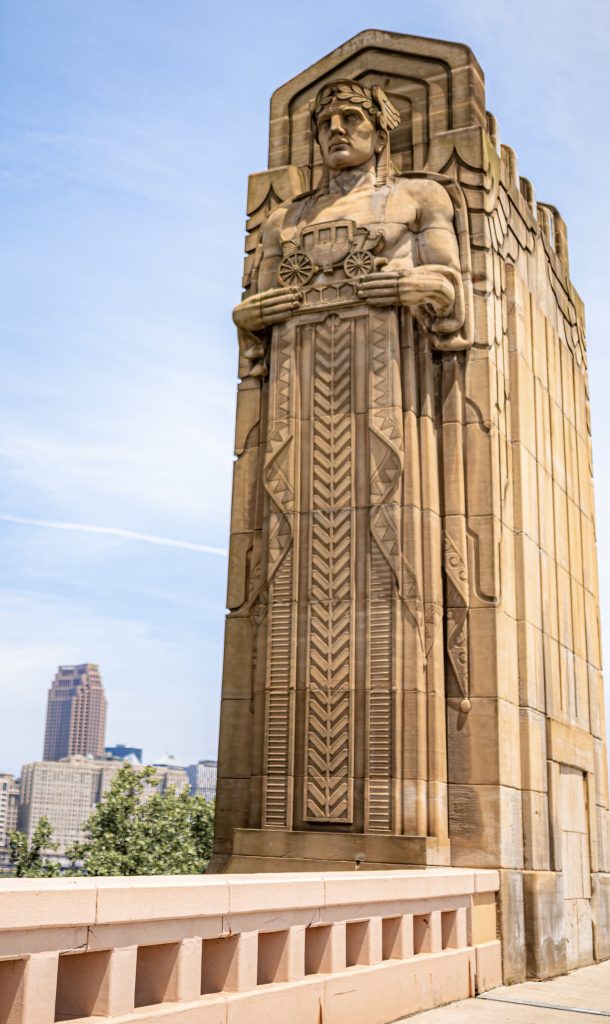
Last month the Cleveland Indians decided to change their name to the Guardians, a reference to the wonderful art deco statues adorning the city’s Hope Memorial Bridge.

A Guardian of Traffic at the Hope Memorial Bridge (Wikimedia Commons)

Unfortunately, it seems that no one in the Indians’ organization bothered to Google ‘Cleveland Guardians,’ as doing so would quickly show that a men’s roller derby team already goes by that name.

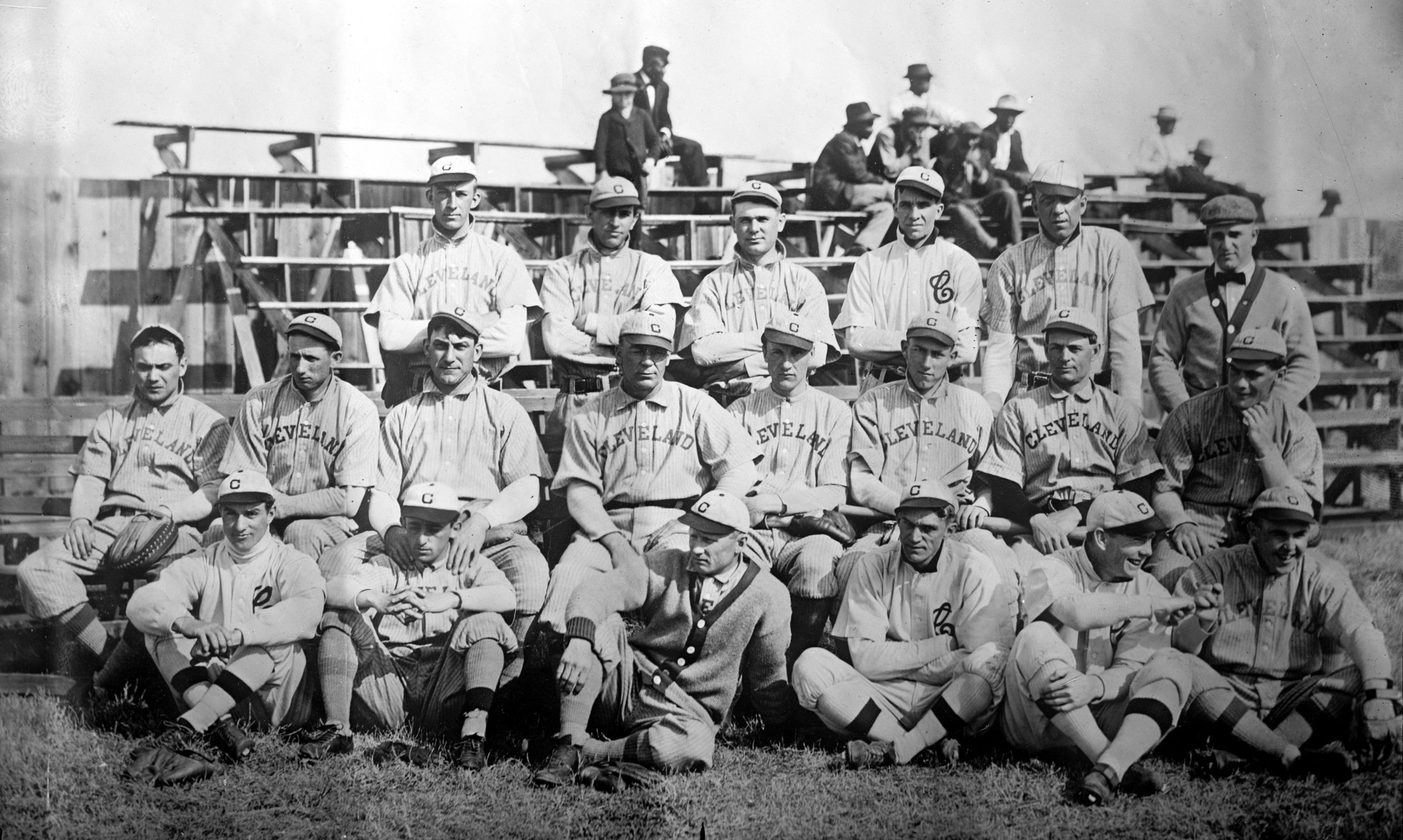
But all is not lost. Before assuming the Indians name in 1915, the team was known as the Cleveland Napoleons, often shortened to the Naps, after star player and manager Napoleon ‘Nap’ Lajoie.

The 1909 Cleveland Naps. Nap Lajoie is third from the left in the second row (Wikimedia Commons).

I say they should bring back the Naps name. They can use the Sandman as their new mascot, and hire Lindsay Wagner for commercials.

In memoriam H. D. Cameron (1934-2021)

I received the sad news from my alma mater the other day that H. D. Cameron has died. I first met Prof. Cameron in the summer of 2004, long before I became a student at Michigan. Even at that early date Michigan was my first choice for doctoral study, and I went to Ann Arbor to see the university for myself and meet with some faculty. I went over to the Classical Studies department in Angell Hall and found Prof. Cameron roaming the hall as he so often did. He asked me if he could be of service, and when I explained my purpose, he rousted some grad students to talk to me in the library. As Ben Fortson’s obituary indicates, this was typical of Prof. Cameron. Once I became a student at Michigan a few years later I saw him often in that hallway, dispensing wisdom, advice and good cheer. He made an effort to learn the names of graduate students, even those like me who were not directly part of the Classical Studies department. He was like an uncle to the entire department, someone that every department needs but too few have.

Buying an MA

I have just read an excellent piece by Anne Helen Petersen on her Culture Study blog about the dynamics of paid-for MA degrees. I always tell prospective graduate never to pay for their degrees, but Anne has articulately explained why and described how these programs are essentially traps for unwary and inexperienced students who are enamored of academia or looking to improve their credentials and their job prospects.

I was fortunate not to pay for either of my graduate degrees, yet despite that I still ended up with $16,000 in debt from grad school alone (along with another $12,000 from my undergraduate years). This debt was a result of my stipends simply not being high enough to cover my living expenses (when I began my MA at the University of Colorado in 2005, my annual stipend was $15,000). But still, my debt was accrued over nine years of grad school. By contrast, some of the students in Anne’s piece paid $60,000 per year in tuition alone. This is absolutely staggering!

How did I avoid this trap? I applied to both PhD programs and terminal MA programs (which are more likely to have funding). So when I was rejected by PhD programs, I had two choices for MA programs (Tufts and Colorado), and I picked the option with the better funding offer. A truly ambitious (or pretentious) student may scoff at the University of Colorado, but it really doesn’t matter where you get your MA degree — unlike the PhD, where it can matter enormously. I got an excellent start to my graduate education, including essential teaching experience, and while I came out of the program with a little debt, it was worth it, in part because admissions committees can tell the difference between an earned MA like mine and a ‘purchased’ one, like the Master’s of Arts Program in Humanities at the University of Chicago, which was featured in Anne’s piece.

Graduate degrees are great, but I would hardly call them essential. Sure, they’re necessary to become a professor or a museum curator, but these positions are vanishingly rare now, such that paying for a degree to try to get one is an exceedingly poor gamble. And in the real world they count for almost nothing. For example, my brother has a BS (or maybe a BA; I don’t remember), which he earned over five years instead of four at an excellent but not especially illustrious university. Yet he makes twice what I do (when I was receiving a steady paycheck, that is), and has for many years. Similarly, my brother-in-law doesn’t even have a college degree, and while I am at a complete loss to explain what his job is, whenever I visit him he has a bigger house and a bigger truck. Both my brother and my brother-in-law focused on experience instead of schooling, both with excellent results. Unless you’re absolutely certain you want a career in academia, graduate school may not be worth your while, and it’s certainly not worth going into crippling debt.
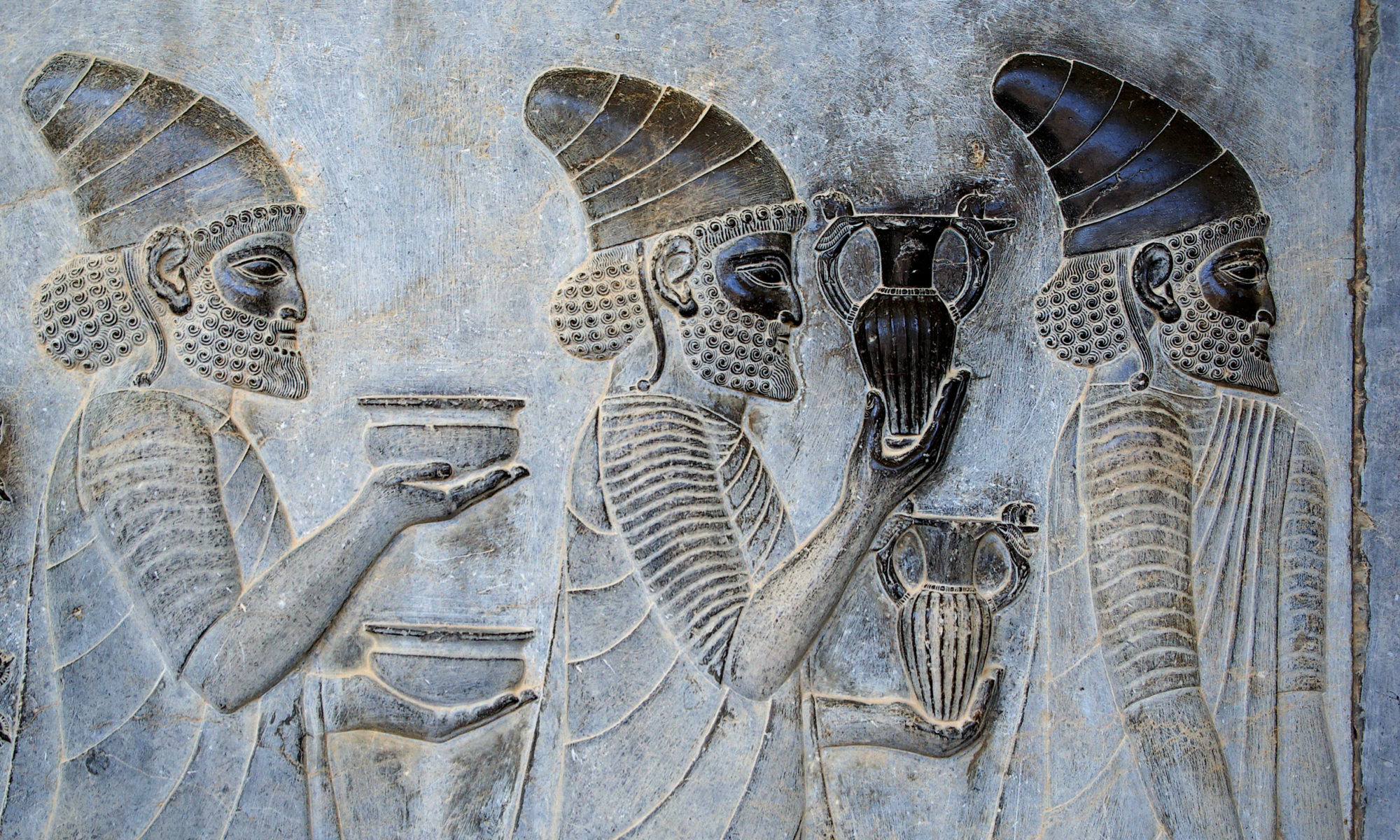
Journal of Iran National Museum

I have just become aware of a new open-access journal published by the Iran National Museum: the Journal of Iran National Museum. It publishes articles in Persian and English, and in their first number from last fall I recognized the names of several excellent scholars among the authors. It looks very promising, and I am eager to see the next issue!