ASCSA and the Laurence Professor

Today I saw two job ads that really caught my attention. Now, in the interest of fairness I should say that I’ve had a few drinks before writing this post (John Dewar and I are old friends). But I still feel impelled to comment publicly, if only for the sake of catharsis.

The first job is assistant director of the American School of Classical Studies in Athens. To be clear, I have absolutely no interest in this position and will not apply for it. But there are two requirements for this position that are striking. First, it states that applicants must have spent at least one year as a member of ASCSA. To my mind this clearly is meant to ensure that ASCSA continues to be an exclusive club, rather than a bona fide scholarly entity. But that should come as to no surprise to anyone who has read the drivel published in Hesperia. More insidiously, however, is the requirement that applicants be no more than five years out from completing their PhDs. What does this requirement accomplish? Nothing, other than assuring inexperience. I myself am more than five years out, and I would very good at this job — and more importantly I am sure there are others who would be even better at it who are also more than five years on from graduation. Like with the ACLS fellowships, this assumes that anyone who has been on the job market for more than five years has already given up. Then again, I know better than to expect thoughtfulness from ASCSA.

The other job that caught my attention is the Laurence Professorship of Classical Archaeology at Cambridge. I find it especially telling that in the full description of the post, “knowledge of Latin and/or Greek” is considered “Desirable” rather than “Essential.” Of course the previous incumbent, Martin Millett, readily admitted to having no ancient languages. But his scholarship on Roman Britain spoke for itself, and indeed he was worth all of the previous Laurence Professors put together (excepting, of course, Jocelyn Toynbee, whose legacy remains unsurpassed). Anthony Snodgrass, for example, spent his entire career a day late and a dollar short, whereas Millett boldly forged ahead and transformed the field formerly known as ‘Romanization.’ I hope very much that the next Laurence Professor is in the mold of Millett rather than Snodgrass (or, heaven help us, R. M. Cook), but I know better than to hold my breath.

Sober Addendum (June 19, 2021)

I don’t mean to imply that I do not respect Anthony Snodgrass or R. M. Cook; I think both are fine scholars. But Cook was content to remain within the established, self-referential bubble of the Classics, and he was intransigent and highly resistant to change. That an article he published in 1937 (‘Amasis and the Greeks in Egypt,’ JHS 57, 227-37) is still brilliant is both a demonstration of his great ability and a damning critique of the field. Snodgrass at least came to recognize that change was taking place, and that change was not necessarily bad. But he was slow on the uptake to be sure, compared to several of his contemporaries. I suppose my point is that the Laurence Professor ought to lead the field instead of following it, or worse yet be left behind by it altogether.

Bulliet’s maxims and Collingwood’s principles

Richard Bulliet, the retired Columbia history professor and author of The Camel and the Wheel (Harvard University Press, 1975), among many other classic books, just posted a list of ten maxims he has learned over the course of his professional career. I agree with all of them, and although Bulliet focuses on the medieval Middle East, I think they all apply equally well to the study of the ancient past. I will not repeat his maxims here; rather, as an archaeologist I would like to make three additions, all of which come from another great scholar, R. G. Collingwood.

In his autobiography (republished by Oxford University Press in 2013 as R. G. Collingwood: An Autobiography and Other Writings), Collingwood articulated three principles he had learned. They are as follows:

  1. Never dig “either a five-thousand-pound site or a five-shilling trench without being certain that you can satisfy an inquirer who asks ‘What are you doing this piece of work for?’”
  2. “Since history proper is the history of thought, there are no mere ‘events’ in history: what is miscalled an ‘event’ is really an action, and expresses some thought (intention, purpose) of its agent.”
  3. “No problem should be studied without studying what I call its second-order history; that is, the history of historical thought about it.”

Principles 1 and 3 are fairly straightforward: never lose track of your research question and always study the history of a problem before you try to address it. Principle 2 is trickier, but in many respects is the most profound. Collingwood is saying that every object is the result of a series of decisions about its production, form, purchase, use, reuse and deposition. We can reconstruct, albeit imperfectly, some of these decisions and use them to write history. This has been one of the guiding principles of my own scholarship.

An early start to the 2021-22 job season

The 2021-22 job season is off to an early start it seems, as I have just seen the first advertisement with a fall deadline (well, late summer). It is for a position in the Department of Foreign Languages and Literatures at National Taiwan University. I don’t think I’ll apply, if only because Taipei is very long commute from Jersey City (and it looks like they want to hire a philologist anyway). But it looks like a fine job, especially for someone interested in something other than the usual classics teaching experience. Alternatively, one could instead opt for the position of curator at the Museum of Polo in Lake Worth, Florida. Opportunities abound!

The future of archaeology at Sheffield

I recently learned that the Department of Archaeology at the University of Sheffield is facing closure. I once considered studying for my PhD there (but the Rocky Mountains lured me to Colorado instead), and I am distraught at this possibility. I therefore wrote at once to the university’s leadership to explain why I think archaeology at Sheffield is so important, and I reproduce my letter in full below:

I am very distressed to learn that the University of Sheffield is contemplating the closure of its archaeology department. Indeed, the only reason I know that this university exists is because of the prominence of its archaeologists!

For several decades Sheffield has been the leader in the field of Mediterranean prehistory. Its staff have revolutionized our understanding of ancient agriculture, trade in the Mediterranean and prehistoric administration, to name only a few examples. The department has also made major contributions to the development of archaeological theory, including the use of postcolonialism, postmodernism and globalization in archaeological interpretation. Several essays and books by the Sheffield archaeology faculty are already considered classics in this field, and are mandatory reading for many doctoral students around the world.

I myself am trained as a classicist and art historian, and my research interests hardly overlap with the two fields I have mentioned above. Additionally, other than an undergraduate degree from St. Andrews, I have no connections to the UK, let alone to Sheffield. Yet despite this I have been aware of the university’s prominence in these fields for most of my career and I know the names of a third of the department’s faculty from their scholarship. This is a staggering figure, unmatched by other universities, such as Oxford or UCL.

I therefore urge you in the strongest terms to reconsider any decision to reduce or eliminate archaeology at Sheffield. That an obscure scholar like me knows this department from its intellectual merits alone demonstrates its importance and global reach. Focusing on more conventional fields of study at the expense of archaeology would make the university indistinguishable from the multitude of plate glass universities in the UK. In short, to eliminate archaeology would be to remove what makes Sheffield special.

I will be very surprised if anyone seriously considers what I have to say on this subject, but I feel it had to be said nonetheless. Archaeology departments in the UK are truly wonderful, and we cannot afford to lose any of them!

There is a petition at change.org to save the department. I urge everyone interested in the future of archaeology to sign it.

The invention of the Chicken Dance

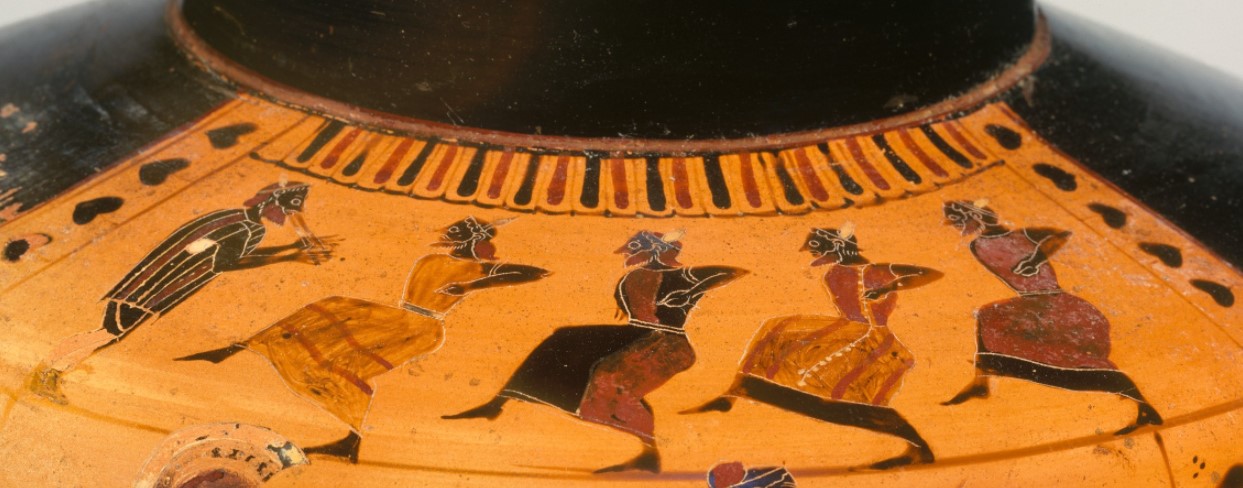
Today I would like to report on a startling new discovery (made in collaboration with my wife, Dr. A. M. Belis of the Metropolitan Museum): the Chicken Dance did not originate in Switzerland in the 1950s as is commonly believed, but in ancient Greece. The evidence is provided by an Athenian black-figure hydria in the Met, attributed to the Circle of Lydos and dating to ca. 560 BCE.

Terracotta hydria, ca. 560 BCE; attributed to the Circle of Lydos; H. 50.1 cm. Metropolitan Museum of Art 1988.11.3 (The Bothmer Purchase Fund).

These figures probably represent the chorus of a Greek comedy, but they are clearly doing the Chicken Dance to the accompaniment of a flautist.

Howard University’s Classics Department

Locke Hall at Howard University, which currently houses the university’s classics department.

Last month Howard University in Washington, DC announced plans to eliminate its classics department. I myself believe that it would be best if most classicists were employed in other academic departments, such as history, Romance languages, linguistics, art history, etc., so as to make them intellectually accountable to a larger field than the echo chamber of classics. But Howard is the only HBCU with a classics department, and given the important role that the classics played in the education of, for example, Frederick Douglass and W. E. B. Du Bois, not to mention its role in modern white supremacy narratives, I think that if any school needs a classics department it’s Howard.

In an interview with NPR, Dr. Anika Prather made an interesting suggestion which I think is a brilliant way to deal with Howard’s specific concerns and a good model for classics departments more generally. She suggested creating a department encompassing Africana studies, philosophy and classics that “continues this focused study of classics within the narrative of the Black experience.” I think this is a wonderful idea that would build on Howard’s strengths and put the classicists teaching there in a more meaningful setting than a traditional classics department would provide.

In memoriam Pierre Amiet (1922-2021)

I learned this morning that Pierre Amiet, the longtime head curator of antiquités orientales at the Louvre has died. Amiet was one of the finest scholars of ancient Near Eastern art in the 20th century. I think of him as a French Edith Porada (which I mean as a high compliment). Like Porada, he was an expert on glyptic, especially Elamite glyptic, a field in which his scholarship remains fundamental. But also like Porada he was at home in a wide range of media, including sculpture, ivories and metalwork. I am especially appreciative of his work on ancient Iranian art, in particular his books Elam (1966) and L’âge des échanges inter-iraniens: 3500-1700 avant J.-C. (1986), both which were indispensable to me during my museum stints at Harvard and the Met.

ACLS Leading Edge Fellowships

The other day I came across the American Council of Learned Societies’ Leading Edge Fellowships, which place recent humanities PhDs with nonprofits dedicated to social justice. I think these fellowships are a capital idea — they allow early career scholars to work outside of academia without actually leaving it. In other words, this would appear on an academic CV as ‘ACLS Leading Edge Fellow,’ while on a resume it would look like a normal, non-academic job. It’s quite a clever arrangement, and no one could object to the organizations receiving the benefit of these scholars’ talent.

Yet I also wish to record my dismay at these fellowships’ eligibility requirements: one must have earned a PhD after September 1, 2016. What does this say about those of us who earned our degrees before that date but are still struggling to find work? That we’re beyond hope? Arguably those of us who have been on the market the longest are more in need of help, especially help transitioning to other forms of employment, in part because we are no longer eligible for any other sorts of fellowships. At this point I can only apply for ‘senior’ fellowships, such as those at the Institute for Advanced Study or the National Humanities Center, but in doing so I have to compete with tenured professors. In all fairness, I don’t feel that the ACLS owes me anything. I just continue to marvel at how blind mainstream academia is to the state of the humanities job market.

This never would have happened under Darius

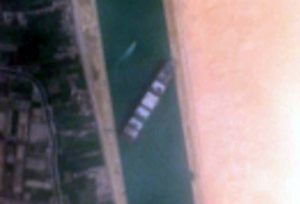
The Ever Given in the Suez Canal. Captured by the MultiSpectral Instrument (MSI) of the Copernicus Sentinel-2 mission on 24 March 2021 at 11:08 UTC. (I got it from Wikipedia.)

I refer, of course, to the Ever Given, the massive container ship which has been stuck in the Suez Canal since Tuesday (i.e. March 23). As I’m sure you all know, Darius I dug a canal from the Pelusiac branch of the Nile through the Wadi Tumilat to the Bitter Lakes, whence it turned south to meet the Gulf of Suez (Herodotus 2.158). In all fairness, nothing so large as the Ever Given could have sailed Darius’ canal. It was probably only deep enough to be navigable during the rainy season. But that didn’t stop Darius from making grandiose claims about the canal, in trilingual cuneiform and hieroglyphic inscriptions on the stelae he erected along it. For example:

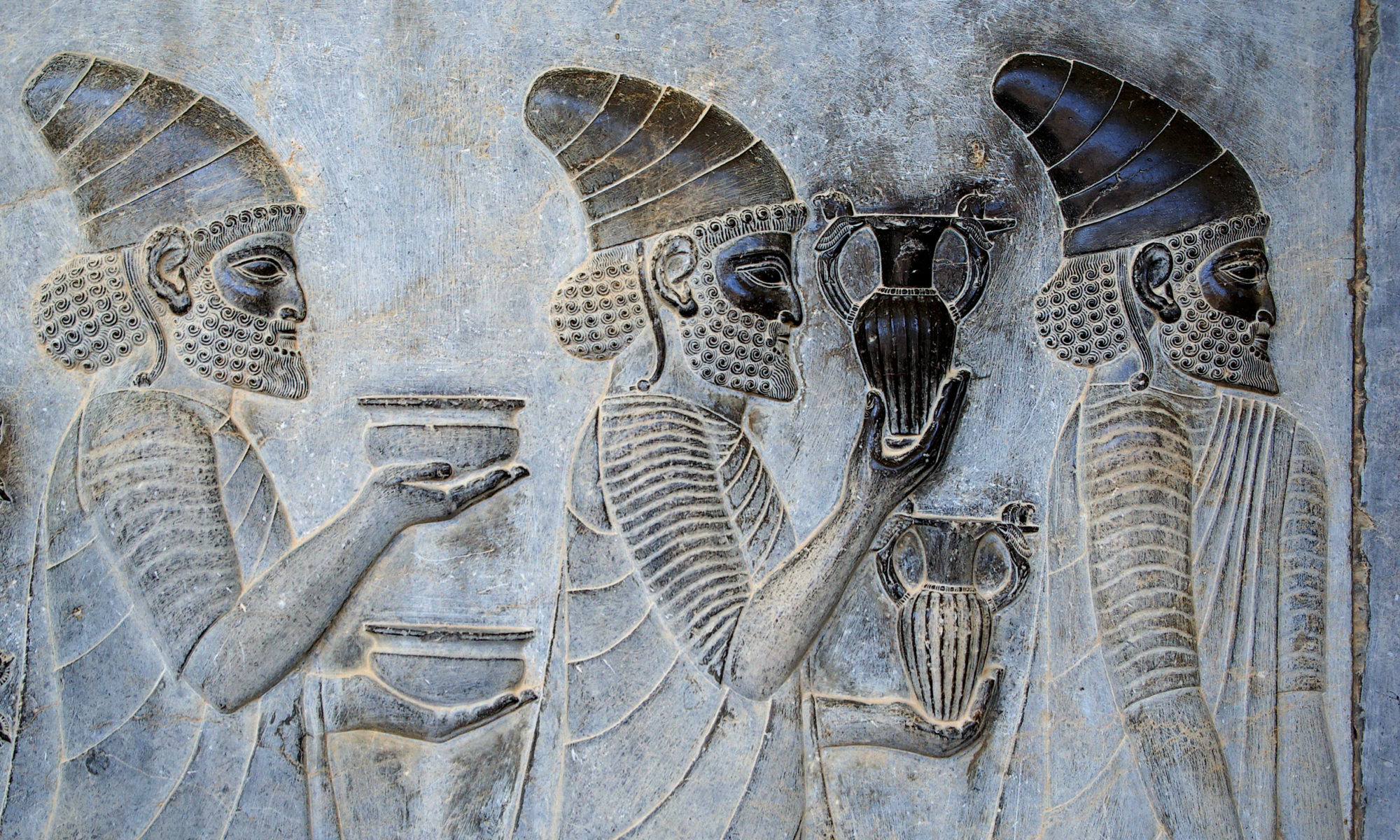
King Darius proclaims: I am a Persian; from Persia, I seized Egypt. I ordered this canal to be dug, from a river called Nile, which flows in Egypt, to the sea which goes to Persia. So this canal was dug as I had ordered, and ships went from Egypt through this canal to Persia, as was my desire. (DZc; translation from A. Kuhrt, The Persian Empire, Routledge, 2007, pp. 485-6.)

Herodotus (1.143.1) says the Persians are landlubbers, but Darius seemed to have other ideas!